


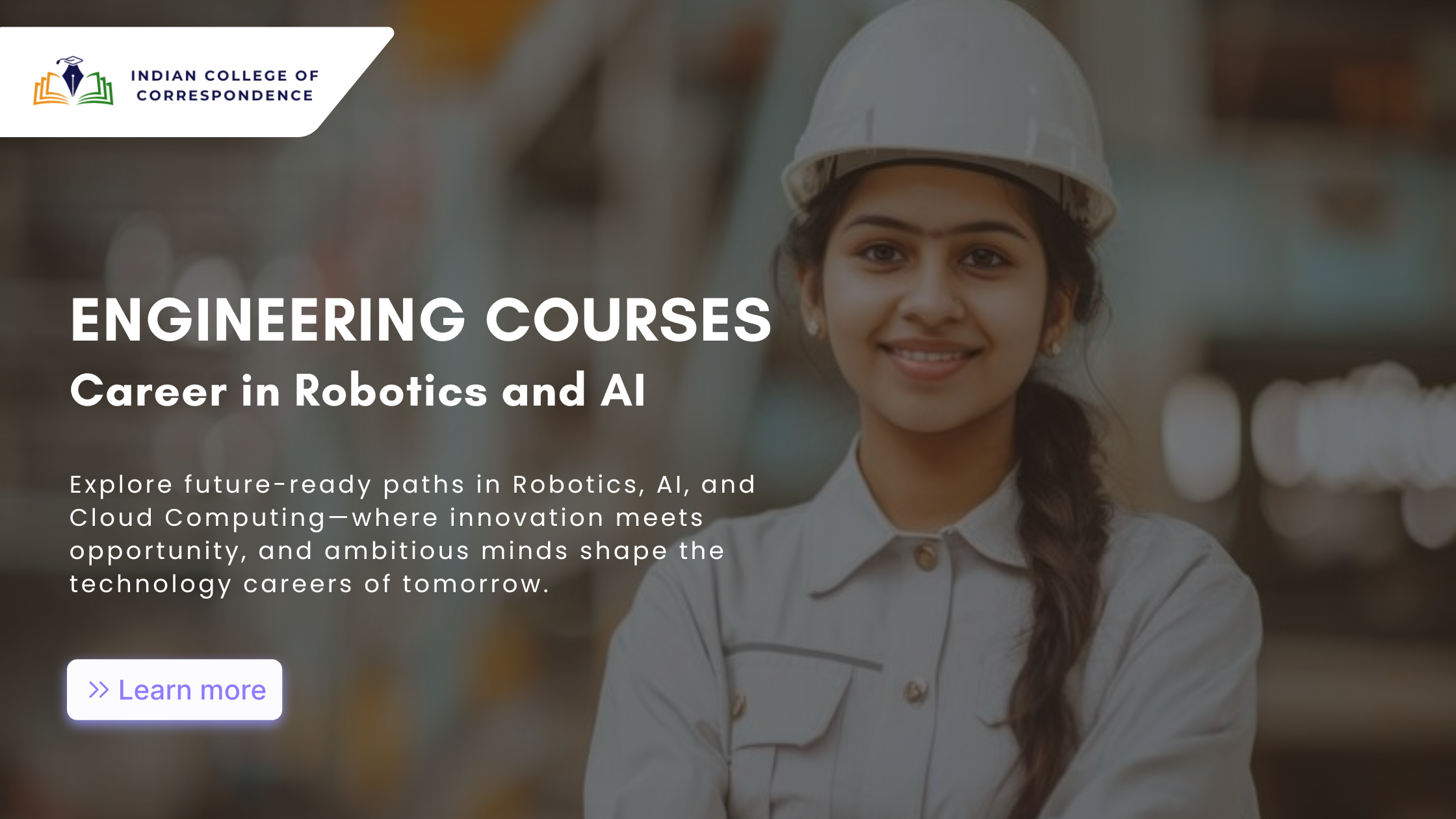
Not long ago, choosing from available Engineering Courses was fairly straightforward – students would usually pick a traditional branch like Mechanical, Civil, Electrical, or Computer Science and build a career from there. But today, engineering is evolving at an incredible pace. Machines are learning, robots are transforming industries, and cloud platforms are becoming the backbone of modern businesses. Artificial Intelligence is reshaping everything from healthcare and finance to education and manufacturing. The world now needs engineers who can do more than understand systems – it needs engineers who can build smarter systems. Whether you are a student mapping out your future or a working professional exploring distance education in India, this is an exciting time to step into future-ready engineering fields.
What makes it even better is that the path to success is no longer limited to one traditional route. With flexible learning models, specialized technical programs, and career-focused education, entering fields like Robotics, AI, and Cloud Computing is becoming easier and more accessible for learners everywhere.
Engineering Is Entering Its Most Exciting Era
Take a look at how deeply technology is woven into daily life.
- Your smartphone predicts what you want to type.
- Streaming apps understand what you like watching.
- Factories rely on robotic systems for speed and precision.
- Banks use AI to improve security and customer service.
- Businesses around the world operate smoothly using cloud platforms.
- Homes are becoming smarter, more connected, and increasingly automated.
At the center of all this progress is engineering.
What’s truly changing now is what industries expect from engineers. Companies are no longer hiring only for traditional technical knowledge – they want professionals who understand intelligent automation, machine learning, digital infrastructure, and connected systems.
That shift is influencing how students choose Engineering Courses, opening doors to modern, exciting career opportunities that did not exist at this scale before.
Why Robotics, AI, and Cloud Computing Are Leading the Future?
These three fields are no longer separate worlds. Together, they are driving innovation across industries.
A robot working in a warehouse may use:
- Robotics for movement
- AI for decision-making
- Cloud Computing for data storage and remote monitoring
A smart healthcare platform may use:
- AI for diagnosis
- Robotics for surgical precision
- Cloud systems for secure patient records
This powerful combination is creating a new generation of engineers – professionals who understand how intelligent technology works as one connected ecosystem.
Future Technology Snapshot
| Technology | What It Does | Career Opportunity |
| Robotics | Builds automated machines | Robotics Engineer |
| Artificial Intelligence | Creates intelligent systems | AI Engineer |
| Cloud Computing | Powers digital infrastructure | Cloud Architect |
| IoT & Embedded Systems | Connects smart devices | IoT Engineer |
| Automation | Optimizes industrial systems | Automation Engineer |
The future is deeply interconnected – and engineers who understand that connection will have an edge.
1) Robotics Engineering – Building Machines That Move with Intelligence
If the idea of designing smart machines excites you, Robotics Engineering could be a great fit.
This specialization combines:
- mechanical systems
- electronics
- programming
- automation logic
- sensor technology
Robotics engineers build machines capable of performing tasks with remarkable speed, precision, and intelligence.
From advanced manufacturing and warehouse automation to healthcare robotics and autonomous vehicles, this field is transforming how industries operate.
For learners who want flexibility in how they study, Engineering distance education can offer a practical starting point before moving into specialized technical training.
Robotics is no longer just about machines – it’s about creating intelligent movement and smarter systems.
2) Artificial Intelligence Engineering – Teaching Systems to Think
AI has quietly become part of everyday life.
Voice assistants respond naturally.
Algorithms personalize your online experience.
Healthcare systems help doctors detect diseases earlier.
Businesses automate operations using intelligent software.
AI Engineering focuses on:
- machine learning
- neural networks
- predictive analytics
- computer vision
- natural language processing
This field continues to grow rapidly because intelligent systems are becoming essential across industries.
Students choosing modern Engineering Courses increasingly view AI not as a trend, but as one of the strongest foundations for future careers.
3) Cloud Computing Engineering – The Digital Backbone of Modern Business
Behind every major digital service is cloud infrastructure.
Your email? Cloud.
Your streaming apps? Cloud.
Business software? Cloud.
Remote work platforms? Cloud.
Cloud engineers design and manage the systems that keep digital platforms secure, scalable, and efficient.
They work on:
- cloud architecture
- infrastructure management
- cloud security
- DevOps systems
- scalable computing environments
Professionals looking to shift into future-focused technical roles often prefer an Online Engineering course for working professionals because it allows them to build new skills without stepping away from their current careers.
Cloud engineering has become one of the most valuable technical specializations in today’s job market.
Choosing the Right Path – Simple Comparison
| Engineering Course | Best For | Career Growth |
| Robotics Engineering | Machine builders | Very High |
| AI Engineering | Problem solvers & coders | Extremely High |
| Cloud Computing | Digital infrastructure thinkers | Very High |
| Mechatronics | Multi-disciplinary learners | Strong |
| Embedded Systems | Hardware + software enthusiasts | Growing Fast |
Sometimes, the right choice becomes easier when you connect it with what naturally interests you.
4) Mechatronics Engineering – The Best of Multiple Worlds
Mechatronics brings together:
- mechanics
- electronics
- computing
- automation
- robotics integration
It’s an excellent option for students who enjoy learning across multiple technical disciplines instead of focusing on just one.
Think of it as a flexible engineering path built for modern innovation.
5) Computer Science Engineering with AI Focus
Computer Science remains one of the strongest engineering foundations—but adding AI specialization makes it even more relevant for the future.
This route offers:
- strong coding fundamentals
- software design skills
- intelligent automation knowledge
- AI integration expertise
Some learners explore flexible academic pathways through a B.Tech correspondence college in India before moving into specialized engineering roles with additional certifications and skill-building.
The route may look different, but the opportunities can be equally rewarding.
6) Embedded Systems Engineering – The Hidden Intelligence Inside Smart Devices
Smart technology depends on embedded systems more than many realize.
Embedded engineers help power:
- drones
- wearables
- industrial sensors
- robotics control systems
- IoT devices
This specialization plays a key role because Robotics and AI rely heavily on intelligent hardware working behind the scenes.
7) Automation & Control Engineering – Engineering Efficiency
Industries everywhere are becoming smarter and more efficient.
Automation engineers make that possible.
They build:
- programmable control systems
- industrial robotics workflows
- smart manufacturing solutions
- automated operational systems
This field continues to grow because businesses are investing heavily in speed, precision, and operational efficiency.
8) Data Engineering – The Fuel Behind AI and Cloud
Every intelligent system depends on data.
AI needs data to learn.
Cloud needs data systems to scale.
Businesses need data insights to make decisions.
Data engineers build:
- pipelines
- storage architectures
- analytics ecosystems
- scalable data systems
Without strong data engineering, modern intelligent technologies simply cannot perform at their best.
9) IoT Engineering – Connecting the World
Imagine technology that communicates on its own – homes that manage energy smartly, industries that monitor machines in real time, and cities that optimize traffic automatically.
That’s IoT.
IoT engineering connects physical systems with digital intelligence, making it one of the most exciting and fast-growing technical fields today.
10) Advanced Engineering Specialization – Level Up Your Career
For professionals already working in technical roles, advanced specialization can unlock stronger career growth.
Many engineers continue learning through M.Tech correspondence college in Karnataka programs that allow them to deepen expertise while staying employed.
Others begin with foundational technical learning through a Diploma in Engr correspondence college in India, then gradually move toward specialized engineering careers.
Education is becoming more flexible – and that flexibility is creating more opportunities for ambitious learners.
Why Recognition Matters in Flexible Learning?
When choosing flexible study options, credibility matters.
Selecting a UGC approved distance learning institute helps ensure:
- recognized credentials
- academic credibility
- better higher-study opportunities
- stronger professional acceptance
- long-term educational value
Institutions like Indian College of Correspondence help learners explore flexible educational pathways that align with both career goals and modern industry demands.
For students and professionals alike, accessible learning can be the bridge between where they are now and where they want to be.
That’s why Indian College of Correspondence continues to support learners who value flexibility, relevance, and career-focused technical education.
Final Thoughts – The Future Needs Engineers Who Think Bigger
Engineering today is about far more than solving technical problems.
It’s about building smarter machines, intelligent systems, and powerful digital ecosystems.
Robotics will automate industries.
AI will transform decision-making.
Cloud Computing will power innovation worldwide.
The engineers who master these fields will help shape the next chapter of technology.
And whether your journey begins traditionally or through flexible education pathways, what matters most is choosing a direction that keeps you growing.
With the right mindset, the right specialization, and the right learning path, Indian College of Correspondence can be part of your journey toward a brighter engineering future.
Frequently Asked Questions
Which engineering course is best for Robotics?
Robotics Engineering, Mechatronics, Embedded Systems, and Automation Engineering are among the strongest options for students interested in intelligent machines and automation.
Is AI Engineering a good career in India?
Yes, AI Engineering is one of the fastest-growing technical fields, offering strong opportunities across healthcare, finance, education, manufacturing, and digital services.
Which engineering specialization has global job demand?
Cloud Computing, Artificial Intelligence, Robotics, IoT, and Data Engineering all have strong international demand and excellent long-term career prospects.
Can working professionals pursue technical engineering learning?
Yes, flexible technical education models – including online and career-focused programs – make it easier for working professionals to continue learning while managing their jobs.
Does accreditation matter in flexible education?
Absolutely. Choosing recognized and approved institutions is essential for academic credibility, career value, and long-term educational benefits.
Ready to Build Your Future?
Explore future-ready engineering pathways built for tomorrow’s industries – not yesterday’s trends.
Visit us:www.indiancollegeofcorrespondence.com, to explore flexible Engineering Courses, get expert guidance, and find the right program that matches your career goals.
Choose wisely. Learn continuously. Build confidently. Begin your engineering journey today.