Admission opens for 2026-27 sessions for all university.

Blog Detail

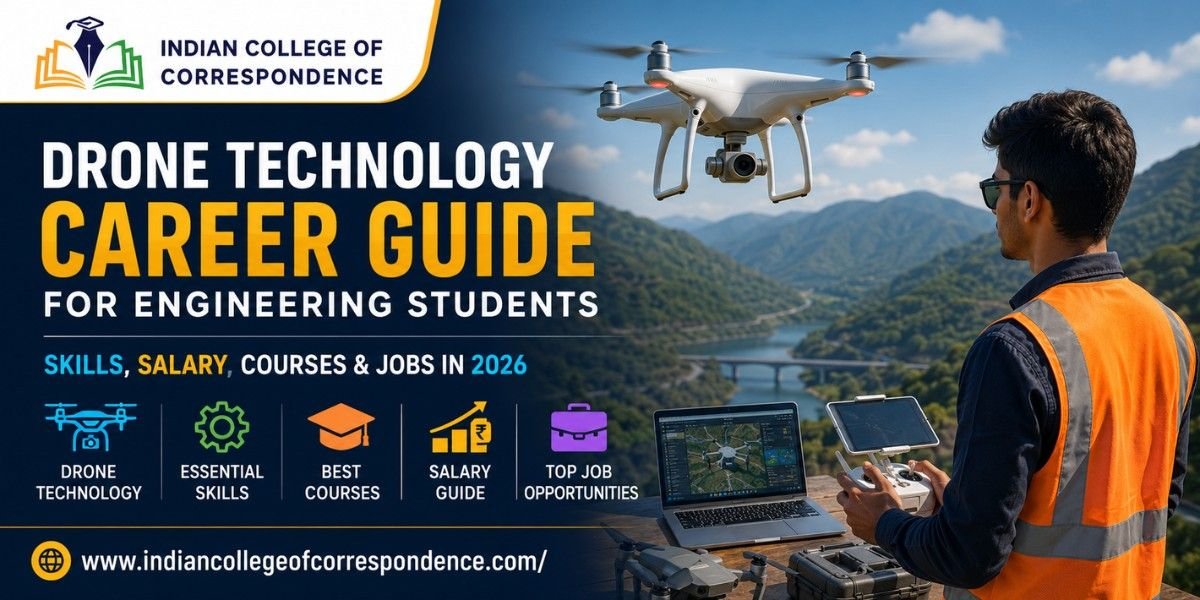
  • Drone Technology Career Guide for Engineering Students: Skills, Salary, Courses & Jobs in 2026

    • 31,Jul 2026
    • Posted By : opsadsthrivein@gmail.com opsadsthrivein@gmail.com
    • 0 Comments
    • B.Tech correspondence college in India
    • Engineering distance education
    • M.Tech correspondence college in Karnataka
    The demand for skilled drone professionals is growing rapidly as industries adopt unmanned aerial vehicles (UAVs) for surveying, agriculture, logistics, defence, infrastructure, disaster management, and smart city development. This Drone Technology Career Guide is designed to help engineering students understand the skills, career opportunities, salary potential, and educational pathways required to succeed in this exciting field. Whether you’re planning your graduation or looking for specialized technical training, this Drone Technology Career Guide will help you make informed career decisions. As drone innovation continues to expand across India, building expertise today can open doors to high-paying jobs and long-term career growth in one of the country’s fastest-growing technology sectors.

    Why Drone Technology Is Becoming One of India’s Fastest-Growing Careers?

    Drone technology has evolved far beyond aerial photography. Today, drones play a vital role in infrastructure development, agriculture, environmental monitoring, surveillance, healthcare deliveries, mining, construction, and defence operations. India’s growing investment in indigenous drone manufacturing, smart agriculture initiatives, and digital infrastructure has significantly increased the demand for qualified drone professionals. According to industry reports, the Indian drone market is expected to witness substantial growth over the next decade, creating thousands of new technical and engineering jobs. This Drone Technology Career Guide explains why engineering students should seriously consider this field as a future-proof career option. Several factors are driving this growth:
    • Government support through Drone Rules and Drone Shakti initiatives
    • Expansion of AI-powered autonomous drones
    • Increasing adoption across private industries
    • Growing startup ecosystem
    • Demand for GIS mapping and aerial surveying
    • Rise of precision agriculture
    • Smart city development projects
    Unlike many traditional engineering careers, drone technology combines multiple disciplines including electronics, mechanical engineering, software development, artificial intelligence, robotics, communication systems, and aviation technology. Students pursuing Engineering distance education can also build successful careers in drone technology by combining academic knowledge with industry certifications, practical drone training, and project-based learning.

    Why Engineering Students Should Consider Drone Technology?

    Engineering students already possess many of the technical fundamentals required in drone development and operations. Subjects such as electronics, programming, embedded systems, control systems, mechanics, and communication engineering directly contribute to drone technologies. This Drone Technology Career Guide recommends drone technology because it offers:
    • High industry demand
    • Excellent salary packages
    • Diverse career opportunities
    • International employment prospects
    • Entrepreneurial opportunities
    • Government sector recruitment
    • Startup innovation
    Students from Computer Science, Electronics, Mechanical Engineering, Civil Engineering, Aeronautical Engineering, and Information Technology can all find specialized career paths within the drone industry. Additionally, graduates from a B.Tech correspondence college in India can strengthen their employability by completing DGCA-approved drone certifications, AI courses, GIS training, and hands-on UAV projects.

    Industries Using Drone Technology

    Industry Drone Applications Career Opportunities
    Agriculture Crop monitoring, spraying Agricultural Drone Specialist
    Defence Surveillance & reconnaissance UAV Engineer
    Construction Site inspection & mapping Survey Engineer
    Mining Land surveying GIS Analyst
    Logistics Parcel delivery Drone Operations Manager
    Disaster Management Rescue & monitoring Emergency Drone Operator

    Drone Technology Courses

    One of the biggest advantages of entering this field is the availability of multiple learning pathways. Whether you’re a fresh engineering student or a working professional looking to upgrade your skills, several drone-focused programs are available today. This Drone Technology Career Guide recommends choosing courses that combine theoretical knowledge with practical flying experience and certification. Popular learning options include:

    Diploma in Drone Technology

    Diploma programs focus on:
    • Drone assembly
    • Flight operations
    • UAV maintenance
    • Safety protocols
    • Mapping technology
    Students interested in technical education may also explore a Diploma in Engr correspondence college in India alongside specialized drone certifications to strengthen both their academic and practical expertise.

    B.Tech Programs

    Many universities now integrate drone technology into:
    • Aerospace Engineering
    • Robotics
    • Electronics Engineering
    • Mechanical Engineering
    • Computer Science
    Students enrolled in a B.Tech correspondence college in India can complement their engineering education with online drone simulation tools, UAV workshops, and practical training to remain competitive in the evolving technology industry.

    Specialized Drone Pilot Training

    DGCA-approved training institutes provide certification in:
    • UAV Operations
    • Commercial Drone Flying
    • Drone Maintenance
    • Drone Mapping
    • Surveying
    These certifications are highly valued by employers.

    AI & Drone Integration Courses

    Modern drones increasingly rely on Artificial Intelligence. These courses cover:
    • Computer Vision
    • Autonomous Navigation
    • Machine Learning
    • Object Detection
    • Image Processing
    Combining AI with drone technology significantly expands career opportunities.

    GIS & Remote Sensing Programs

    Drone mapping professionals frequently work with:
    • GIS Software
    • Satellite Data
    • Surveying Tools
    • Geospatial Analytics
    Learning these technologies creates opportunities across infrastructure, mining, agriculture, and environmental sectors.

    Who Can Join Drone Technology Courses?

    Most programs accept students from:
    • Mechanical Engineering
    • Electronics Engineering
    • Civil Engineering
    • Computer Science
    • Information Technology
    • Aeronautical Engineering
    Even professionals working in technical industries can transition into drone careers through certification programs. Students pursuing distance education in Bangalore can benefit from flexible learning while simultaneously acquiring drone operation skills, allowing them to balance education with practical industry exposure. Drone technology is rapidly reshaping multiple industries, making it one of the most exciting career choices for engineering graduates. By choosing the right educational pathway, gaining hands-on experience, and continuously upgrading technical skills, students can build a strong foundation for long-term success in this field.

    Skills Every Drone Engineer Should Learn

    The drone industry is expanding rapidly, and employers are looking for professionals who possess both technical expertise and practical problem-solving abilities. This Drone Technology Career Guide recommends developing a balanced combination of engineering knowledge, software skills, and operational experience to build a successful career. Here are the essential skills every aspiring drone engineer should master:

    1. Drone Hardware Knowledge

    Understanding drone components is the foundation of every drone career. You should know about:
    • Flight Controllers
    • Motors
    • ESCs
    • GPS Modules
    • Batteries
    • Sensors
    • Cameras
    These components determine drone performance and reliability.

    2. Electronics & Embedded Systems

    Modern drones rely heavily on embedded electronics. Important concepts include:
    • PCB Design
    • Circuit Analysis
    • Microcontrollers
    • Arduino
    • Raspberry Pi
    • Sensor Integration
    Engineering students who already have electronics fundamentals can learn these skills more quickly.

    3. Programming Skills

    Programming has become essential for intelligent drones. Recommended languages include:
    • Python
    • C++
    • Java
    • ROS (Robot Operating System)
    Programming helps in:
    • Autonomous flight
    • Object detection
    • Navigation
    • AI integration

    4. Artificial Intelligence

    AI is making drones smarter than ever before. Popular AI applications include:
    • Facial Recognition
    • Traffic Monitoring
    • Crop Health Analysis
    • Autonomous Navigation
    • Obstacle Avoidance
    This Drone Technology Career Guide encourages engineering students to combine AI with UAV technology to remain future-ready.

    5. GIS & Drone Mapping

    Many industries hire drone engineers specifically for mapping projects. Popular software includes:
    • ArcGIS
    • QGIS
    • Pix4D
    • DroneDeploy
    These skills are valuable in:
    • Construction
    • Mining
    • Surveying
    • Urban Planning

    6. Drone Regulations

    Understanding DGCA rules is equally important. Professionals should know:
    • Drone categories
    • Flight permissions
    • No-fly zones
    • Safety regulations
    • Commercial operation guidelines
    Employers highly value certified drone operators who understand aviation regulations.

    7. Soft Skills

    Besides technical expertise, companies also expect:
    • Communication
    • Teamwork
    • Leadership
    • Analytical Thinking
    • Project Management
    Students pursuing Engineering distance education can strengthen these professional skills through internships, workshops, and collaborative engineering projects.

    Drone Technology for Agriculture

    Agriculture has become one of the largest users of drone technology in India. Modern farming increasingly depends on drones to improve productivity, reduce costs, and support precision farming. This Drone Technology Career Guide highlights agriculture because it offers excellent career opportunities for engineering graduates interested in combining technology with sustainable farming.

    Applications of Agricultural Drones

    Modern drones perform tasks such as:
    • Crop Health Monitoring
    • Fertilizer Spraying
    • Pesticide Spraying
    • Soil Analysis
    • Irrigation Planning
    • Field Mapping
    • Yield Prediction
    Instead of manually inspecting large farms, drones collect accurate aerial data within minutes, helping farmers make informed decisions.

    Career Opportunities in Agricultural Drones

    Engineering graduates can work as:
    • Agricultural Drone Pilot
    • Precision Farming Specialist
    • Drone Mapping Engineer
    • GIS Analyst
    • UAV Field Engineer
    • Drone Maintenance Engineer
    These roles are becoming increasingly popular as government initiatives promote smart agriculture across India.

    Benefits of Drone Technology in Agriculture

    Drone technology provides several advantages:
    • Saves Time
    • Reduces Labour Costs
    • Improves Crop Productivity
    • Detects Plant Diseases Early
    • Optimizes Water Usage
    • Supports Sustainable Farming
    This growing adoption creates long-term career opportunities for engineering graduates interested in agricultural technology. Students completing distance education in Bangalore can also explore specialized drone certifications to enter this rapidly expanding sector while continuing their academic studies.

    Drone Technology Jobs in 2026

    One of the biggest strengths of this Drone Technology Career Guide is that drone careers are no longer limited to aviation companies. Today, professionals are recruited across multiple industries. Popular job roles include:
    • Drone Engineer
    • UAV Engineer
    • Drone Pilot
    • Drone Survey Engineer
    • Drone Software Developer
    • GIS Analyst
    • Drone Operations Manager
    • Drone Maintenance Engineer
    • AI Drone Developer
    • Drone Research Engineer
    Government organizations, defence agencies, construction firms, agriculture companies, infrastructure developers, and technology startups are actively recruiting drone specialists. Graduates from a B.Tech correspondence college in India can improve their placement opportunities by combining engineering education with DGCA certification, AI knowledge, and practical drone projects.

    Drone Technology Salary in India

    Salary packages vary depending on technical expertise, certifications, industry, and experience. Fresh graduates generally receive competitive packages, while experienced drone professionals earn significantly higher salaries.

    Drone Technology Salary Overview

    Job Role Experience Average Salary
    Drone Pilot Fresher ₹4–6 LPA
    UAV Engineer 2–4 Years ₹8–12 LPA
    Drone Software Engineer 3–5 Years ₹10–18 LPA
    GIS Analyst Fresher ₹5–8 LPA
    Drone Project Manager Senior ₹18–30 LPA
    Professionals with expertise in AI, robotics, GIS, and autonomous navigation often receive the highest compensation because these skills are increasingly valuable across industries. Students pursuing a Diploma in Engr correspondence college in India can further improve their salary prospects by acquiring specialized drone certifications and practical field experience before entering the workforce. The drone industry is evolving rapidly, creating exciting opportunities for engineering students who invest in the right technical skills and certifications. Whether your interest lies in agriculture, defence, mapping, logistics, or AI-powered drones, building practical expertise today can help you secure rewarding roles in the future.

    Future Scope of Drone Technology in India

    The future of drone technology is incredibly promising as industries continue adopting unmanned aerial vehicles for smarter, faster, and safer operations. This Drone Technology Career Guide highlights that drones are no longer limited to photography—they are now transforming agriculture, logistics, defence, infrastructure, mining, environmental monitoring, and healthcare. The Indian government is actively promoting drone manufacturing through initiatives like Drone Shakti, Digital India, and Make in India, creating significant employment opportunities for engineers. As Artificial Intelligence, 5G connectivity, IoT, and automation continue to evolve, drones will become even more intelligent and autonomous. Future career opportunities include:
    • AI Drone Engineer
    • Autonomous UAV Developer
    • Drone Fleet Manager
    • Drone Data Analyst
    • Drone Software Architect
    • Drone Security Specialist
    • UAV Research Scientist
    This Drone Technology Career Guide recommends continuously upgrading technical skills because emerging technologies will create even greater demand for drone professionals over the coming decade.

    Common Mistakes Engineering Students Should Avoid

    Many students are excited about drone technology but often overlook the skills employers actually value. Avoiding these common mistakes can significantly improve your career prospects.

    1. Learning Only Drone Flying

    Flying a drone is important, but companies also expect knowledge of programming, electronics, AI, and UAV systems.

    2. Ignoring DGCA Regulations

    Commercial drone operations require compliance with DGCA guidelines. Understanding legal requirements makes you a more responsible and employable professional.

    3. Not Building Practical Projects

    Employers prefer candidates with hands-on experience. Build drone prototypes, mapping projects, AI-based navigation systems, or autonomous UAV applications to strengthen your portfolio.

    4. Avoiding Programming

    Programming languages like Python and C++ are becoming essential for autonomous drone development.

    5. Ignoring Industry Certifications

    Professional certifications demonstrate your technical expertise and improve your chances of getting shortlisted by recruiters.

    6. Not Networking

    Participate in hackathons, drone competitions, workshops, internships, and engineering conferences to connect with professionals in the industry. This Drone Technology Career Guide emphasizes that practical learning and continuous upskilling are just as important as earning an engineering degree.

    How ICC Supports Future Engineering Professionals

    Building a successful career requires more than earning a degree—it requires continuous learning, technical skills, and career guidance. ICC supports students by providing flexible educational opportunities that help them balance academics with professional development. Whether you’re pursuing Engineering distance education, looking for a B.Tech correspondence college in India, or planning higher studies through an M.Tech correspondence college in Karnataka, ICC encourages students to strengthen their technical knowledge alongside emerging technologies like drone engineering, Artificial Intelligence, robotics, and automation. Students seeking distance education in Bangalore can also benefit from flexible study options that allow them to pursue certifications, internships, and industry projects simultaneously. As a trusted correspondence college in India, ICC believes in preparing students with future-ready knowledge, helping them stay competitive in rapidly evolving technology industries.

    Conclusion

    Drone technology is rapidly becoming one of the most promising engineering career paths in India. As industries increasingly adopt UAVs for automation, surveying, agriculture, logistics, and defence, the demand for skilled professionals continues to rise. This Drone Technology Career Guide has explored the essential skills, educational pathways, salary expectations, certifications, and career opportunities available in this exciting field. Whether you’re pursuing engineering today or planning your future career, combining academic knowledge with practical drone training, AI skills, and industry certifications will significantly improve your employability. The future belongs to engineers who embrace innovation, continuously upgrade their skills, and stay ahead of technological advancements. Start preparing today, and you’ll be well-positioned to succeed in the evolving drone technology industry.

    Build Your Future in Drone Technology with ICC

    The drone industry is creating exciting opportunities for engineering graduates across agriculture, defence, construction, logistics, and smart infrastructure. If you’re passionate about innovation and emerging technologies, now is the perfect time to invest in your future. Indian College of Correspondence offers flexible education pathways that allow students to continue learning while developing industry-relevant technical skills. Explore engineering programs, upgrade your knowledge with professional certifications, and prepare for one of India’s fastest-growing technology careers. Contact ICC today and take the first step toward becoming a future-ready engineering professional.

    FAQs

    1. Is drone technology a good career in India?

    Yes, drone technology is one of the fastest-growing career fields in India due to increasing adoption across agriculture, defence, logistics, infrastructure, healthcare, mining, and smart city projects. Government initiatives like Drone Shakti and Make in India have accelerated investments, creating excellent opportunities for engineers and UAV specialists. The industry offers roles in drone operations, software development, mapping, AI integration, and maintenance. Students pursuing Engineering distance education can strengthen their career prospects by combining flexible learning with DGCA-approved certifications, practical drone projects, and internships. With rising demand and continuous technological innovation, drone technology promises strong career growth, competitive salaries, and global employment opportunities.

    2. What qualification is required to become a drone engineer?

    Drone engineers usually come from backgrounds such as Mechanical Engineering, Electronics, Computer Science, Aeronautical Engineering, Civil Engineering, or Information Technology. In addition to an engineering degree, employers prefer candidates with DGCA-approved drone pilot certifications, GIS knowledge, embedded systems expertise, AI skills, and practical UAV experience. Building a portfolio with real-world drone projects also improves employability. Students studying through a B.Tech correspondence college in India can prepare for successful drone careers by combining academic learning with professional certifications, workshops, coding practice, and hands-on training, helping them become industry-ready professionals in this rapidly expanding field.

    3. What is the average salary of a drone engineer in India?

    Drone engineers enjoy attractive salary packages due to increasing demand across multiple industries. Fresh graduates generally earn between ₹4–8 LPA, while professionals with three to five years of experience often receive ₹10–20 LPA or more depending on their technical expertise. Specialists in AI-powered drones, robotics, GIS mapping, autonomous navigation, and drone software development usually command even higher salaries. Students pursuing an M.Tech correspondence college in Karnataka can further improve their earning potential by specializing in advanced drone technologies, Artificial Intelligence, embedded systems, and automation, making them highly competitive for senior engineering and research positions.

    4. Which engineering branch is best for drone technology?

    Several engineering branches provide excellent preparation for drone technology careers, including Mechanical Engineering, Electronics & Communication Engineering, Computer Science Engineering, Aeronautical Engineering, Civil Engineering, and Information Technology. Each discipline contributes valuable technical skills such as programming, electronics, control systems, UAV design, surveying, robotics, and AI integration. Rather than focusing only on the branch, students should prioritize practical learning through certifications, internships, and drone projects. Engineering graduates who continuously upgrade their technical knowledge and gain real-world UAV experience have excellent career opportunities across defence, agriculture, construction, logistics, and smart infrastructure industries.

    5. Can B.Tech students join the drone industry?

    Absolutely. B.Tech graduates are among the most preferred candidates for drone-related careers because they possess strong engineering fundamentals in electronics, mathematics, programming, mechanics, and design. Companies recruit B.Tech graduates for roles such as UAV Engineer, Drone Software Developer, Drone Pilot, Survey Engineer, and Drone Systems Designer. Students studying through a B.Tech correspondence college in India can also enter this field by completing DGCA certifications, learning AI, GIS mapping, and embedded systems, while building practical drone projects. Combining academic education with technical certifications significantly improves employability and opens opportunities across India’s rapidly growing drone industry.

    6. What certifications are required for drone careers?

    Although engineering degrees provide strong technical foundations, professional certifications greatly enhance career opportunities in the drone industry. Popular certifications include the DGCA Remote Pilot Certificate, Drone Mapping Certification, GIS and Remote Sensing programs, AI and Machine Learning certifications, UAV maintenance training, and drone surveying courses. These qualifications demonstrate practical expertise and industry readiness, making candidates more attractive to employers. Students pursuing a Diploma in Engr correspondence college in India can strengthen their resumes by combining diploma education with specialized drone certifications, hands-on flying experience, and real-world UAV projects that showcase their technical abilities.

    7. Is drone technology in demand in 2026?

    Yes, drone technology will remain one of the most in-demand engineering sectors in 2026. Organizations across agriculture, defence, infrastructure, logistics, mining, construction, healthcare, and environmental monitoring are rapidly increasing drone adoption to improve efficiency and reduce operational costs. Advancements in Artificial Intelligence, automation, IoT, and robotics continue expanding career opportunities for drone engineers. Students pursuing distance education in Bangalore can take advantage of this growing demand by developing drone programming skills, completing DGCA-approved certifications, participating in internships, and building practical UAV projects alongside their academic studies to become highly employable professionals.

    8. How can engineering students prepare for drone technology jobs?

    Engineering students should begin by developing strong fundamentals in electronics, embedded systems, programming, Artificial Intelligence, robotics, communication systems, and UAV operations. Building drone prototypes, participating in engineering competitions, learning GIS software, and completing DGCA-approved drone certifications significantly improve employability. Creating a strong portfolio through GitHub projects and internships also demonstrates practical expertise to recruiters. Students studying through a correspondence college in India can successfully prepare for drone technology careers by combining flexible education with continuous technical upskilling, industry certifications, networking opportunities, and real-world engineering projects that align with current industry requirements.

Leave A Comment