

 D.Ed is a commonly used name for a diploma-level teacher education qualification. Under the National Council for Teacher Education (NCTE) regulations, the standard programme nomenclature is Diploma in Elementary Education (D.El.Ed).
The programme focuses on preparing individuals to understand how children learn and how teachers can create an effective learning environment.
Unlike general academic programmes, teacher education combines theoretical knowledge with practical preparation. Students learn how to explain concepts, prepare lessons, understand children’s learning behaviour and manage classroom activities.
| Understanding Children | Learning to Teach | Applying Classroom Knowledge |
| Child development | Lesson planning | Teaching practice |
| Learning behaviour | Subject teaching methods | Classroom observation |
| Individual differences | Communication skills | Practical assignments |
| Inclusive education | Assessment methods | School-based experience |
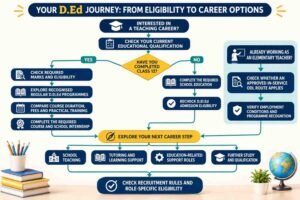
| School-Based Opportunities | Education Support Roles | Further Academic Pathways |
| Elementary teaching, subject to eligibility | Teaching assistant | Eligible bachelor’s programmes |
| Primary-level teaching roles | Learning support assistant | B.El.Ed or other relevant pathways |
| Private school teaching | Educational content support | B.Ed, where eligible |
| School-based learning support | Academic support staff | Further teacher education |
| Understanding Learners | Classroom Management | Teaching Communication |
| Patience and empathy | Time management | Clear explanations |
| Child psychology | Classroom organisation | Language skills |
| Inclusive thinking | Conflict handling | Active listening |
| Observation | Student engagement | Feedback and assessment |
 Students should not choose a teacher education programme based only on advertisements, low fees or promises of guaranteed employment.
A recognised qualification and suitable practical training are essential.