
 This has expanded the types of work available to people with communication skills.
For example, a journalist may report a local development for a newspaper, prepare a video report for a digital platform and contribute to a podcast discussion. A communication graduate may work with a company to prepare announcements, manage social media content or coordinate public relations activities.
The growth of digital communication has also increased the importance of skills such as:
| Subject | What You Learn | How It Helps |
| Introduction to Journalism | The meaning, purpose, history and functions of journalism | Understands the role of journalists and media organisations |
| Communication Theories | Communication models, processes and audience interaction | Builds an understanding of how messages reach people |
| News Reporting | News gathering, interviewing, observation and report writing | Develops the foundation for reporting careers |
| Editing and Newspaper Production | Headlines, copy editing, page layout and proofreading | Prepares students for editorial and publishing work |
| Media History | Development of print, radio, television and digital media | Explains how the media industry has evolved |
| Media Laws and Ethics | Legal responsibilities, privacy, accuracy, fairness and professional conduct | Encourages responsible communication |
| Radio Journalism | Radio scripting, voice presentation, audio recording and programme formats | Introduces audio broadcasting and podcast-related work |
| Television Journalism | Camera basics, news presentation, scripting and video reporting | Builds familiarity with broadcast journalism |
| Photography and Visual Communication | Composition, lighting, framing and visual storytelling | Develops skills for photojournalism and multimedia content |
| Advertising | Advertising concepts, campaign planning and creative communication | Introduces brand and agency-related careers |
| Public Relations | Media relations, press releases, reputation and communication planning | Supports corporate and agency communication roles |
| Digital Journalism | Online reporting, multimedia storytelling and digital publishing | Prepares students for digital news platforms |
| Film and Documentary Studies | Visual storytelling, documentary formats and production concepts | Introduces film, video and documentary work |
| Research Methods | Information gathering, surveys, analysis and research writing | Strengthens research and evidence-based communication |
| Career Role | Approximate Entry-Level Annual Salary | Possible Career Progression |
| Reporter / Journalist | ₹2.5–5 lakh | Senior Reporter, Correspondent, Bureau Chief |
| Content Writer | ₹2–4.5 lakh | Senior Writer, Content Editor, Content Strategist |
| Sub-Editor / Copy Editor | ₹2.5–4 lakh | Senior Sub-Editor, News Editor |
| Digital Media Executive | ₹3–5 lakh | Digital Content Manager, Digital Media Strategist |
| Public Relations Executive | ₹3–5.5 lakh | PR Manager, Corporate Communication Manager |
| Social Media Executive | ₹3–6 lakh | Social Media Manager, Digital Campaign Lead |
| Copywriter | ₹2.5–5 lakh | Senior Copywriter, Creative Strategist |
| Video Editor | ₹2.5–5 lakh | Senior Editor, Video Producer |
| Production Assistant | ₹2–4 lakh | Associate Producer, Producer |
| Photography / Multimedia Assistant | ₹2–4.5 lakh | Photographer, Multimedia Producer |
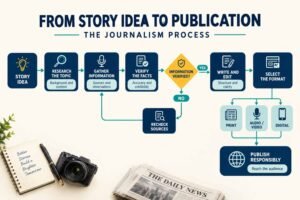 Here are practical ways to start:
Create a writing portfolio: Prepare sample news reports, interviews, feature articles, opinion pieces and researched blog posts. Clearly distinguish factual reporting from personal opinion.
Practise interviewing: Speak to people about local issues, community activities, education, business or cultural events. Prepare questions and verify information before publishing.
Learn basic photography and video: Practise framing, lighting, recording and editing. Create short visual stories that communicate one clear idea.
Explore audio content: Try preparing a short podcast episode, interview or audio feature. Focus on sound quality, structure and clear presentation.
Understand digital publishing: Learn how articles are formatted for websites and how headlines, images and audience needs influence digital content.
Seek internships and feedback: Internships, student media projects and feedback from experienced professionals can help you improve your work.
A portfolio does not need to begin with expensive equipment or large projects. A collection of well-researched, carefully prepared work can be a useful starting point.