
Admission opens for 2026-27 sessions for all university.

Blog Detail

  • Electrical Engineering Careers in India: Scope, Salary & Future Opportunities in 2026

    • 27,Jun 2026
    • Posted By : opsadsthrivein@gmail.com opsadsthrivein@gmail.com
    • 0 Comments
    • B.Tech correspondence college in India
    • Diploma in Engr correspondence college in India
    • Engineering distance education
    • M.Tech correspondence college in Karnataka
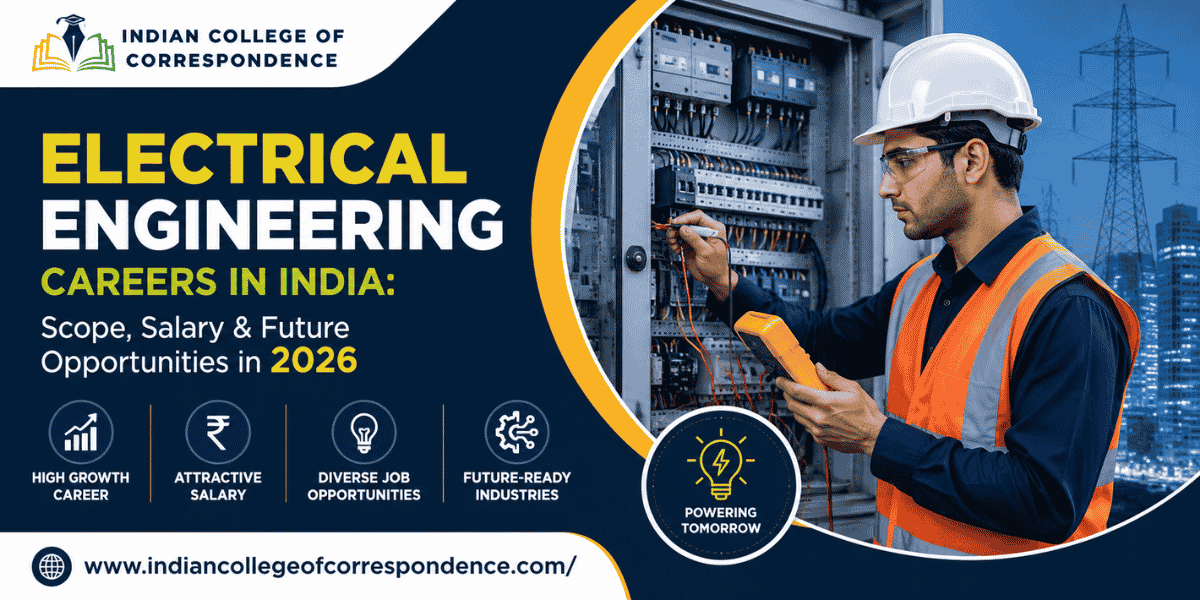
    Electrical Engineering Careers continue to play a vital role in India’s industrial and technological development. From powering smart cities and renewable energy projects to supporting electric vehicles, manufacturing plants, and automation systems, electrical engineers are shaping the country’s future. With increasing investments in infrastructure, energy efficiency, and digital transformation, Electrical Engineering Careers offer excellent job security, competitive salaries, and long-term career growth. Whether you are a student exploring engineering or a working professional looking to upgrade your skills, understanding the latest industry trends can help you make informed career decisions. This guide explores job opportunities, required skills, salary expectations, and future prospects for Electrical Engineering Careers in India in 2026.

    Why Electrical Engineering Remains a High-Demand Career

    India is undergoing rapid transformation in infrastructure, transportation, renewable energy, and industrial automation. Every new metro line, smart building, manufacturing unit, solar plant, and electric vehicle charging station requires skilled electrical engineers. Unlike many professions that experience fluctuating demand, electrical engineering remains an evergreen career because electricity is fundamental to every industry. As technology advances, the role of electrical engineers is expanding beyond traditional power systems into robotics, artificial intelligence, automation, and smart energy management. This growing demand makes Electrical Engineering Careers one of the most reliable career options for students who enjoy solving technical problems and working with modern technologies. Some major growth drivers include:
    • Expansion of renewable energy projects
    • Smart City initiatives
    • Electric Vehicle (EV) manufacturing
    • Industrial automation
    • Railway modernization
    • Semiconductor manufacturing
    • Data centers and cloud infrastructure
    • Power distribution modernization
    These developments are expected to generate thousands of employment opportunities across India over the coming years.

    What Does an Electrical Engineer Do?

    Electrical engineers design, develop, install, maintain, and improve electrical systems that power industries, businesses, and homes. Their responsibilities often include:
    • Designing electrical circuits
    • Managing power generation systems
    • Maintaining industrial machinery
    • Installing electrical equipment
    • Planning energy-efficient systems
    • Supervising electrical projects
    • Conducting safety inspections
    • Troubleshooting technical problems
    • Managing automation systems
    • Working with renewable energy technologies
    Modern Electrical Engineering Careers also involve collaborating with software engineers, mechanical engineers, architects, and project managers to deliver integrated engineering solutions.

    Why Students Should Consider Electrical Engineering in 2026?

    Electrical engineering is no longer limited to power plants and factories. Today’s engineers contribute to cutting-edge innovations in sustainable energy, intelligent transportation, robotics, healthcare equipment, and industrial automation. Some key reasons why students continue choosing Electrical Engineering Careers include:
    • Strong employment opportunities
    • Excellent long-term career stability
    • Global demand for skilled engineers
    • Opportunities in government and private sectors
    • Attractive salary growth
    • Scope for entrepreneurship
    • International career prospects
    • Continuous technological innovation
    As industries increasingly adopt automation and renewable energy, electrical engineers remain essential to economic development.

    Top Job Roles After a Diploma in Electrical Engineering

    A Diploma in Electrical Engineering opens the door to a wide range of career opportunities in industries such as power generation, manufacturing, construction, automation, renewable energy, and infrastructure. Popular job roles include Electrical Technician, Maintenance Engineer, Electrical Supervisor, Site Engineer, Control Panel Technician, Power Plant Operator, Testing and Commissioning Engineer, and Automation Technician. Diploma holders can also find opportunities in government departments, public sector undertakings (PSUs), railways, and private engineering companies. With additional certifications and practical experience, professionals can advance to senior technical and supervisory positions. Continuous skill development further enhances career growth, salary potential, and long-term opportunities in the electrical engineering sector.

    Industries Hiring Electrical Engineers

    One of the biggest strengths of Electrical Engineering Careers is the diversity of industries that recruit professionals. Some of the leading sectors include:

    Power Generation

    Power plants require engineers to design, maintain, and optimize electricity generation systems.

    Renewable Energy

    Solar, wind, and hydroelectric projects continue creating new opportunities for electrical engineers specializing in sustainable technologies.

    Manufacturing

    Factories rely on electrical engineers to maintain production equipment, improve efficiency, and reduce downtime.

    Construction & Infrastructure

    Large commercial buildings, airports, hospitals, and residential projects require sophisticated electrical planning and installation.

    Railways & Metro Projects

    Government investments in railway electrification and metro expansion continue increasing demand for qualified engineers.

    Automobile Industry

    The electric vehicle revolution has significantly expanded opportunities for engineers working on batteries, charging systems, and vehicle electronics.

    Oil & Gas

    Electrical maintenance and safety remain critical in refinery operations and energy production facilities.

    Government Organizations

    PSUs and government departments regularly recruit electrical engineers for infrastructure development and public utilities.

    Industries & Popular Career Roles

    Industry Popular Job Roles
    Power Generation Electrical Engineer
    Renewable Energy Solar Engineer
    Manufacturing Maintenance Engineer
    Construction Site Electrical Engineer
    Railways Project Engineer
    Automobile EV Systems Engineer
    Oil & Gas Electrical Maintenance Engineer
    Government PSU Engineer
    These industries ensure that Electrical Engineering Careers remain relevant across multiple sectors rather than being limited to one specialization.

    Essential Skills Required for Electrical Engineering Careers

    To succeed in today’s competitive job market, technical knowledge alone is not enough. Employers are looking for professionals who can combine engineering expertise with problem-solving, communication, and digital technologies. As industries continue adopting automation and smart systems, the skill requirements for Electrical Engineering Careers are evolving rapidly. Here are some of the most valuable skills every aspiring electrical engineer should develop:
    • Electrical Circuit Design
    • Power System Analysis
    • PLC & SCADA Programming
    • AutoCAD Electrical
    • MATLAB & Simulink
    • Industrial Automation
    • Renewable Energy Systems
    • Electrical Safety Standards
    • Project Management
    • Communication & Teamwork
    • Analytical Thinking
    • Problem-Solving Skills
    Professionals who continuously upgrade these skills remain competitive and enjoy better career growth.

    Career Opportunities After Electrical Engineering

    One of the biggest advantages of choosing Electrical Engineering Careers is the variety of roles available across industries. Graduates can work in design, maintenance, research, automation, manufacturing, consulting, renewable energy, and government organizations. Some of the most popular career options include:

    Electrical Design Engineer

    Designs electrical systems for commercial buildings, industries, manufacturing plants, and infrastructure projects.

    Power Systems Engineer

    Works with electricity generation, transmission, and distribution networks while ensuring efficient power management.

    Automation Engineer

    Develops automated production systems using PLCs, sensors, robotics, and industrial control technologies.

    Renewable Energy Engineer

    Designs and manages solar, wind, and sustainable energy projects that support India’s green energy initiatives.

    Maintenance Engineer

    Ensures industrial machinery and electrical equipment operate safely and efficiently with minimal downtime.

    Project Engineer

    Supervises electrical installations, coordinates teams, manages budgets, and ensures timely project completion.

    Electrical Consultant

    Provides technical guidance to industries regarding electrical planning, safety standards, and energy efficiency.

    Government Engineer

    Works with departments such as Railways, Power Grid, NTPC, BHEL, State Electricity Boards, Metro Rail, and other public sector organizations. The diversity of these roles makes Electrical Engineering Careers highly attractive for students seeking long-term professional growth.

    Junior Electrical Engineering Jobs in Bangalore for Freshers

    Bangalore offers excellent opportunities for fresh graduates starting their Electrical Engineering Careers. Junior electrical engineers are hired by industries such as manufacturing, renewable energy, construction, power distribution, automation, and infrastructure development. Common responsibilities include assisting with electrical system design, equipment testing, maintenance, circuit analysis, and project support. Freshers in Bangalore typically earn between ₹3 LPA and ₹6 LPA, with salaries increasing as they gain technical expertise and practical experience. Developing skills in AutoCAD Electrical, PLC, SCADA, and power systems can significantly improve career prospects. With continuous industrial growth and smart infrastructure projects, Bangalore remains one of India’s best cities for launching successful Electrical Engineering Careers.

    Salary of Electrical Engineers in India (2026)

    Salary depends on education, experience, technical expertise, certifications, industry, and employer. Engineers working in renewable energy, automation, semiconductor manufacturing, and multinational companies generally receive higher compensation.

    Average Salary Based on Experience

    Experience Average Salary
    Fresher ₹3–6 LPA
    2–5 Years ₹6–10 LPA
    5–10 Years ₹10–18 LPA
    Senior Engineer ₹18–35+ LPA
    Professionals with specialized skills in automation, industrial robotics, smart grids, and renewable energy often earn significantly higher packages than the industry average. As India’s infrastructure and energy sectors continue expanding, salary prospects for Electrical Engineering Careers are expected to improve further.

    Electrical Engineering Jobs in Bangalore for Freshers

    Bangalore offers excellent opportunities for fresh graduates looking to begin their Electrical Engineering Careers. As India’s technology and industrial hub, the city is home to leading companies in power generation, renewable energy, manufacturing, automation, construction, and electric vehicle development. Freshers can explore roles such as Electrical Engineer, Design Engineer, Maintenance Engineer, Project Engineer, and Testing Engineer. Entry-level salaries typically range from ₹3 LPA to ₹6 LPA, depending on qualifications, technical skills, and the employer. Candidates with hands-on experience, internships, and knowledge of tools like AutoCAD, PLC, or MATLAB often have a competitive advantage in securing rewarding electrical engineering jobs in Bangalore.

    Higher Education Can Accelerate Career Growth

    While a bachelor’s degree is sufficient for many entry-level positions, pursuing higher education allows engineers to specialize and qualify for leadership, research, and consulting roles. Many students explore Engineering distance education programs to continue learning while working. Flexible education options enable professionals to gain additional qualifications without interrupting their careers. Students planning undergraduate engineering studies often research a B.Tech correspondence college in India to understand flexible academic pathways. Likewise, engineers seeking specialization may consider an M.Tech correspondence college in Karnataka to strengthen expertise in areas such as power systems, control engineering, and renewable energy. Those beginning their technical journey may also explore a Diploma in Engr correspondence college in India, which provides a foundation in engineering concepts and practical applications. For learners seeking flexibility, distance education in bangalore has become an increasingly popular option for balancing education with professional commitments.

    Future Technologies Creating New Opportunities

    The engineering industry is changing rapidly due to digital transformation and sustainable development. These technologies are creating exciting opportunities within Electrical Engineering Careers.

    Smart Grids

    Advanced electricity distribution systems improve efficiency, reliability, and energy monitoring.

    Electric Vehicles (EVs)

    The rapid growth of EV manufacturing creates demand for engineers specializing in batteries, charging infrastructure, and power electronics.

    Renewable Energy

    India’s investment in solar, wind, and green hydrogen projects continues generating employment opportunities.

    Artificial Intelligence

    AI-powered predictive maintenance helps industries detect equipment failures before they occur.

    Internet of Things (IoT)

    Connected electrical devices improve monitoring, automation, and energy management across industries.

    Robotics & Industrial Automation

    Factories increasingly depend on automated systems, requiring engineers skilled in robotics and intelligent manufacturing technologies. These innovations ensure that Electrical Engineering Careers remain highly relevant in 2026 and beyond.

    Government vs Private Sector: Which Is Better for Electrical Engineers?

    One of the most common questions students ask while exploring Electrical Engineering Careers is whether they should choose the government sector or private industry. The answer depends on individual career goals, work preferences, and long-term aspirations. Government organizations generally offer job stability, structured promotions, attractive retirement benefits, and opportunities to contribute to large-scale national infrastructure projects. Public Sector Undertakings (PSUs) such as NTPC, BHEL, Power Grid Corporation, Indian Railways, and State Electricity Boards recruit electrical engineers through competitive examinations and campus placements. On the other hand, private companies often provide faster career progression, higher salary growth, exposure to advanced technologies, and opportunities to work on international projects. Engineers in sectors like renewable energy, electric vehicles, industrial automation, and semiconductor manufacturing frequently experience quicker promotions and greater learning opportunities. Both sectors provide rewarding Electrical Engineering Careers, and the ideal choice depends on your professional priorities.

    Career Roadmap for Electrical Engineers

    A clear career progression motivates many students to choose engineering as a profession. With continuous learning and practical experience, engineers can move into leadership and specialized technical roles. A typical career roadmap looks like this: Diploma / B.Tech Student Graduate Engineer Trainee (GET) Electrical Engineer Senior Electrical Engineer Project Engineer Engineering Manager Technical Consultant Plant Head / Engineering Director Professionals who upgrade their qualifications and develop expertise in automation, renewable energy, AI-powered systems, or project management often enjoy faster career growth. The future of Electrical Engineering Careers is closely linked to innovation, making continuous learning one of the most valuable investments for aspiring engineers.

    Challenges and Opportunities in Electrical Engineering

    Like every profession, electrical engineering comes with its own set of challenges. However, these challenges also create opportunities for professional growth. Some common challenges include:
    • Keeping pace with rapidly changing technologies
    • Managing large-scale engineering projects
    • Ensuring workplace safety
    • Working under strict deadlines
    • Continuous technical upskilling
    • Adapting to evolving industry standards
    Despite these challenges, Electrical Engineering Careers remain highly rewarding because engineers solve real-world problems that directly impact industries and society. Professionals who embrace lifelong learning and stay updated with emerging technologies continue to enjoy excellent career opportunities.

    Why Flexible Learning Supports Career Growth?

    Many working professionals choose flexible education to upgrade their qualifications while continuing their jobs. Recognized engineering programs help learners enhance technical knowledge, improve leadership skills, and prepare for higher-level responsibilities. Students exploring engineering education often compare programs offered by a correspondence college in india to understand flexible academic pathways that suit their schedules. Such learning opportunities can support career advancement when combined with practical experience, certifications, and industry-relevant skills. Continuous education remains one of the strongest factors contributing to long-term success in Electrical Engineering Careers.

    How ICC Helps Future Engineers?

    Choosing the right educational guidance is an important step toward building a successful engineering career. ICC helps students explore flexible educational pathways, compare engineering programs, understand admission procedures, and identify qualifications aligned with current industry demands. Whether you are beginning your engineering journey or planning to enhance your existing qualifications, ICC provides valuable guidance that supports informed academic decisions. With rapid technological advancement, ICC encourages learners to combine strong academic foundations with practical skills, internships, certifications, and continuous upskilling. By helping students understand future career opportunities and educational options, ICC continues supporting aspiring engineers in preparing for long-term professional success.

    Conclusion

    India’s rapid growth in renewable energy, infrastructure development, electric vehicles, smart manufacturing, and industrial automation ensures that Electrical Engineering Careers will remain among the most promising engineering professions in 2026 and beyond. From designing advanced power systems to developing intelligent automation solutions, electrical engineers contribute significantly to the country’s technological progress. Success in Electrical Engineering Careers depends on acquiring strong technical knowledge, practical experience, problem-solving abilities, and a commitment to continuous learning. Engineers who stay updated with emerging technologies such as AI, IoT, smart grids, robotics, and renewable energy will enjoy better career opportunities and higher earning potential. Whether your goal is to work in government organizations, multinational companies, manufacturing industries, or renewable energy projects, Electrical Engineering Careers provide excellent job security, attractive salaries, and global career prospects. With the right educational pathway, industry exposure, and professional development, aspiring engineers can build a rewarding and future-ready career. Build a Successful Engineering Career with ICC Are you planning to pursue a rewarding engineering career? Indian College Of Correspondence helps students explore flexible educational options, understand admission requirements, and choose programs that align with the latest industry trends. Whether you’re starting your engineering journey or upgrading your qualifications, ICC provides guidance to help you make informed decisions for long-term career success.

    FAQs

    1. Is Electrical Engineering a good career in India in 2026?

    Yes, Electrical Engineering Careers continue to be among the most promising career options in India in 2026. The increasing demand for renewable energy, electric vehicles, smart cities, industrial automation, and infrastructure development has created numerous opportunities for skilled electrical engineers. Professionals can work in both government and private sectors, enjoying strong job security and excellent career growth. Students who wish to prepare for this field can also explore Engineering distance education programs to build technical knowledge while balancing other commitments. Continuous learning and practical experience can further improve long-term career prospects.

    2. What is the average salary of an Electrical Engineer in India?

    The average salary of an electrical engineer depends on qualifications, technical skills, experience, and the industry they work in. Fresh graduates generally earn between ₹3–6 LPA, while professionals with five or more years of experience can earn ₹10–18 LPA or higher. Senior engineers and specialists in automation, renewable energy, and power systems may earn ₹18–35+ LPA. Students graduating from a B.Tech correspondence college in India and continuously upgrading their skills through certifications and industry exposure can improve their earning potential over time.

    3. Which industries hire Electrical Engineers?

    Electrical engineers have opportunities across a wide range of industries because electricity powers nearly every sector. Major recruiters include power generation companies, renewable energy firms, manufacturing industries, construction companies, railways, metro projects, oil and gas organizations, automobile manufacturers, infrastructure developers, and government departments. The rise of electric vehicles, smart grids, and automation has further expanded employment opportunities. Professionals who pursue advanced studies through an M.Tech correspondence college in Karnataka can also qualify for specialized technical and leadership roles in emerging engineering sectors.

    4. What skills are required for Electrical Engineering Careers?

    Successful Electrical Engineering Careers require a combination of technical knowledge and practical skills. Engineers should understand electrical circuits, power systems, PLC & SCADA, AutoCAD Electrical, industrial automation, and electrical safety standards. Strong analytical thinking, communication, project management, and problem-solving abilities are equally important. As technology evolves, learning about AI, IoT, renewable energy, and smart grid systems provides additional advantages. Students who begin with a Diploma in Engr correspondence college in India can build a strong technical foundation before pursuing higher qualifications and industry certifications.

    5. Can working professionals pursue Engineering distance education?

    Yes, working professionals can pursue flexible engineering programs while continuing their jobs. Engineering distance education enables learners to enhance their technical knowledge, improve qualifications, and develop skills without leaving their employment. This flexibility makes it easier to balance work responsibilities with academic goals. Many professionals choose these programs to qualify for promotions, leadership roles, or specialized engineering positions. Students and employees looking for flexible learning opportunities often explore distance education in bangalore, where they can receive academic guidance while managing their personal and professional commitments.

    6. What is the future scope of Electrical Engineering in India?

    The future scope of Electrical Engineering Careers is extremely positive due to India’s focus on renewable energy, electric mobility, industrial automation, robotics, smart infrastructure, and digital transformation. Government initiatives supporting clean energy and infrastructure development continue creating new employment opportunities. Engineers specializing in power systems, automation, energy management, and smart technologies are expected to remain in high demand. Students planning their engineering journey through a recognized correspondence college in india can combine academic learning with technical certifications to improve career opportunities in this rapidly evolving field.

    7. Is M.Tech beneficial for Electrical Engineers?

    Yes, pursuing an M.Tech can significantly enhance career opportunities for electrical engineers. A postgraduate qualification allows professionals to specialize in advanced fields such as power systems, control engineering, renewable energy, embedded systems, and industrial automation. It also improves eligibility for senior engineering, research, consulting, and teaching positions. Employers often prefer candidates with advanced technical expertise for leadership roles and high-value projects. Graduating from an M.Tech correspondence college in Karnataka can also help working professionals continue their education while gaining valuable industry experience.

    8. Why should students choose ICC for educational guidance?

    ICC helps students make informed educational decisions by providing guidance on courses, admissions, career planning, and flexible learning opportunities. Whether learners are exploring engineering programs, management studies, or professional qualifications, ICC assists them in selecting pathways aligned with current industry demands. Students looking for flexible engineering education often seek advice on choosing the right correspondence college in india based on their academic goals and career aspirations. With proper educational guidance and continuous skill development, learners can confidently prepare for successful and future-ready engineering careers.

Leave A Comment