
Admission opens for 2026-27 sessions for all university.

Blog Detail

  • Civil Engineering Careers in India: Scope, Salary, and Future Opportunities in 2026

    • 24,Jun 2026
    • Posted By : opsadsthrivein@gmail.com opsadsthrivein@gmail.com
    • 0 Comments
    • B.Tech correspondence college in India
    • Diploma in Engr correspondence college in India
    • Engineering distance education
    • M.Tech correspondence college in Karnataka
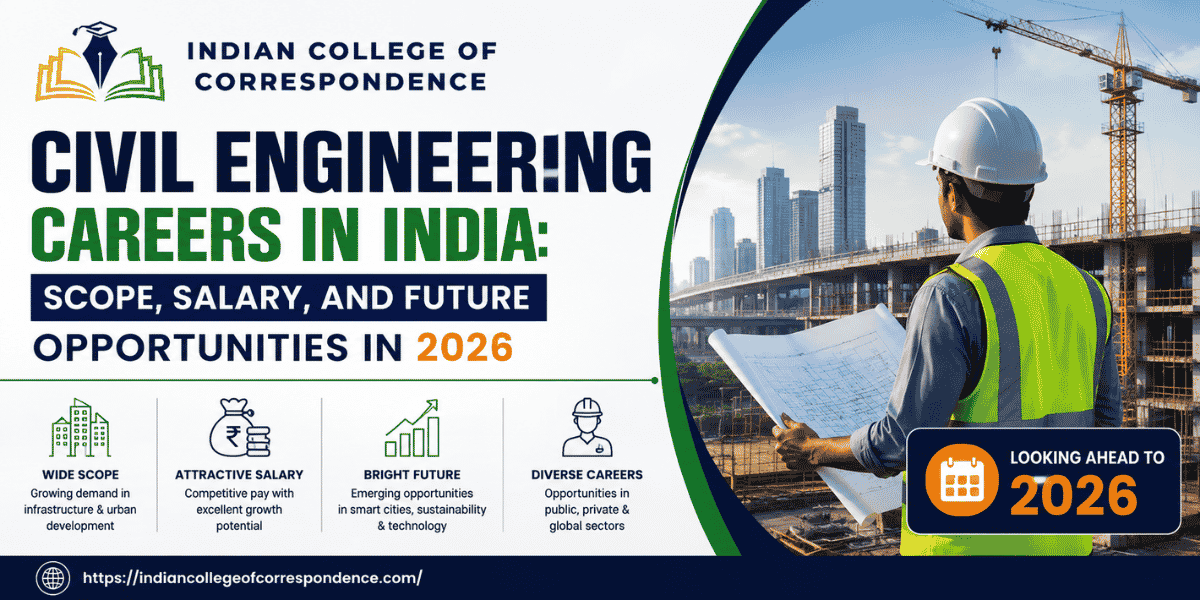
    Civil Engineering Careers continue to play a vital role in shaping India’s infrastructure and economic growth. From smart cities and metro rail projects to highways, airports, and sustainable construction initiatives, the demand for skilled civil engineers remains strong in 2026. As government and private sector investments in infrastructure increase, Civil Engineering Careers are offering exciting opportunities for students and working professionals alike. Whether you aspire to become a structural engineer, project manager, transportation specialist, or construction consultant, Civil Engineering Careers provide diverse pathways for professional growth. With technological advancements such as Building Information Modeling (BIM), AI-powered project planning, and green construction practices, the field is evolving rapidly and creating new possibilities for future engineers.

    Why Civil Engineering Careers Are Growing in 2026?

    India is witnessing one of the largest infrastructure expansions in its history. Massive investments in transportation, urban development, renewable energy, and smart city projects are increasing the need for qualified civil engineers. Several factors driving demand include:
    • Expansion of metro rail networks
    • National highway and expressway projects
    • Smart city development initiatives
    • Sustainable and green construction practices
    • Renewable energy infrastructure
    • Urban housing and commercial real estate growth
    These developments make Civil Engineering Careers highly relevant for students seeking long-term stability and career growth.

    What Do Civil Engineers Actually Do?

    Civil engineers are responsible for planning, designing, constructing, and maintaining infrastructure projects that support modern society.

    Key Responsibilities

    • Designing roads, bridges, and buildings
    • Supervising construction projects
    • Managing budgets and timelines
    • Ensuring quality and safety standards
    • Conducting site inspections
    • Coordinating with architects and contractors
    Because infrastructure development remains a priority for both governments and private organizations, Civil Engineering Careers continue to offer strong employment opportunities.

    Major Career Opportunities in Civil Engineering

    1. Structural Engineer

    Structural engineers design buildings, bridges, and other structures to ensure safety, durability, and performance.

    2. Site Engineer

    Site engineers oversee daily construction activities, ensuring projects are completed according to plans and specifications.

    3. Project Engineer

    Project engineers coordinate technical aspects of construction projects while managing resources and schedules.

    4. Construction Manager

    Construction managers supervise large-scale projects and ensure efficient project execution from start to finish.

    5. Transportation Engineer

    Transportation engineers focus on roads, railways, airports, and urban transportation systems.

    6. Environmental Engineer

    Environmental engineers work on sustainable infrastructure and environmental protection projects. These specialized roles contribute to the growing popularity of Civil Engineering Careers across India.

    Educational Pathways for Civil Engineering Careers

    Students can pursue various educational routes depending on their career goals.

    Diploma Programs

    Many students begin through a Diploma in Engr correspondence college in India, which provides foundational technical knowledge and practical engineering skills.

    Bachelor’s Degree

    A degree from a B.Tech correspondence college in India can help students develop advanced engineering competencies while offering flexibility for learners.

    Advanced Specialization

    Professionals seeking higher-level expertise often pursue programs through an M.Tech correspondence college in Karnataka, enabling specialization in structural engineering, transportation systems, geotechnical engineering, and construction management.

    Flexible Learning Options

    Modern learners increasingly choose Engineering distance education programs that allow them to balance education with work and personal commitments.

    Skills Required for Successful Civil Engineering Careers

    Technical Skills

    • AutoCAD
    • Revit
    • STAAD Pro
    • Surveying Techniques
    • Quantity Estimation
    • Project Planning

    Professional Skills

    • Leadership
    • Communication
    • Problem Solving
    • Team Management
    • Analytical Thinking
    Developing these skills can significantly improve success in Civil Engineering Careers.

    Salary Trends for Civil Engineers in India

    Experience Level Average Salary
    Fresher ₹3–6 LPA
    2–5 Years ₹6–10 LPA
    5–10 Years ₹10–18 LPA
    Senior Professionals ₹18–35+ LPA
    Salary growth depends on specialization, location, certifications, and industry experience.

    Top Industries Hiring Civil Engineers

    Industry Opportunities
    Infrastructure Highways, Bridges, Metro Projects
    Real Estate Residential and Commercial Development
    Renewable Energy Solar and Wind Projects
    Government Sector Public Infrastructure Projects
    Construction Companies Project Execution and Management
    Consulting Firms Design and Planning Services
    The increasing demand across these sectors continues to strengthen Civil Engineering Careers throughout India.

    Future Trends Shaping Civil Engineering Careers

    Smart Cities

    Urban development projects are creating demand for engineers with expertise in integrated infrastructure planning.

    Sustainable Construction

    Green building practices are becoming essential for modern construction projects.

    Building Information Modeling (BIM)

    Digital project management tools are transforming how engineers design and manage infrastructure.

    Artificial Intelligence

    AI-driven planning and predictive maintenance systems are improving project efficiency.

    Drone Technology

    Surveying and monitoring projects have become more accurate through drone-based data collection. These innovations are reshaping Civil Engineering Careers and creating exciting opportunities for future professionals.

    Civil Engineering and Construction Management: Growing Together

    Many civil engineers eventually transition into leadership and project management roles. Programs related to management distance education in bangalore can help professionals build managerial skills that complement technical expertise. As infrastructure projects become more complex, organizations increasingly seek professionals who combine engineering knowledge with project management capabilities.

    How ICC Helps Students Build Successful Careers?

    ICC supports students by providing guidance on educational opportunities, admissions, and career pathways aligned with industry requirements. Whether learners are exploring Engineering distance education, advanced technical programs, or flexible study options, ICC helps them identify pathways that support long-term career success. Professionals seeking educational flexibility can also explore options such as distance education in bangalore, allowing them to continue learning while maintaining work commitments. Through expert guidance and educational support, ICC helps students make informed decisions about their future. ICC remains committed to helping learners prepare for evolving industry demands.

    Conclusion

    Civil Engineering remains one of the most respected and future-focused professions in India. With increasing investments in infrastructure, smart cities, transportation networks, and sustainable construction, Civil Engineering Careers offer strong growth potential in 2026 and beyond. For students interested in building the foundations of tomorrow’s cities and infrastructure, this field provides excellent opportunities, competitive salaries, and meaningful contributions to society. Ready to Build a Successful Civil Engineering Career? Connect with ICC today to explore flexible learning opportunities, admission guidance, and career-focused educational pathways designed to help you achieve your professional goals.

    FAQs

    1. Is Civil Engineering a good career in India in 2026?

    Yes, Civil Engineering continues to be one of the most promising professions in India in 2026. Rapid urbanization, smart city development, metro rail expansion, renewable energy projects, and large-scale infrastructure investments are creating significant demand for qualified engineers. The scope of Civil Engineering Careers extends across government departments, private construction firms, consulting organizations, and multinational infrastructure companies. Engineers are involved in designing, planning, and managing projects that directly contribute to national development. As India continues to invest heavily in transportation, housing, and sustainable infrastructure, civil engineers can expect strong job opportunities, career stability, and long-term professional growth.

    2. What is the average salary of a Civil Engineer in India?

    The salary of a civil engineer depends on factors such as qualifications, experience, specialization, and employer type. Fresh graduates generally earn between ₹3–6 LPA, while professionals with several years of experience can earn ₹10–18 LPA or more. Senior engineers, project managers, and consultants may earn ₹18–35+ LPA depending on their expertise and responsibilities. Professionals pursuing qualifications through a B.Tech correspondence college in India can also enhance their career prospects and earning potential. Additional certifications, technical skills, and experience in specialized areas such as structural engineering or project management often contribute to higher salaries and career advancement opportunities.

    3. Which industries hire Civil Engineers?

    Civil engineers are employed across a wide range of industries that support infrastructure and development projects. Major employers include construction companies, infrastructure developers, real estate firms, transportation agencies, renewable energy organizations, consulting firms, and government departments. Opportunities are also growing in sectors such as smart city planning, environmental engineering, and sustainable construction. The expanding scope of Civil Engineering Careers allows professionals to work on roads, bridges, airports, metro systems, industrial facilities, and urban development projects. Because infrastructure development remains a national priority, civil engineers continue to enjoy diverse employment opportunities across both public and private sectors.

    4. Can working professionals pursue Civil Engineering qualifications?

    Yes, working professionals can continue their education through flexible learning programs designed to accommodate their schedules. Options such as Engineering distance education allow learners to enhance their technical knowledge while maintaining employment. These programs help professionals upgrade their qualifications, improve industry expertise, and prepare for leadership positions. Flexible education pathways are especially valuable for individuals seeking career advancement without interrupting their professional commitments. Combined with practical experience and industry certifications, distance learning can strengthen employability and open new opportunities in engineering, project management, and infrastructure development. Continuous learning remains an important factor in long-term career success.

    5. What skills are required for Civil Engineering Careers?

    Successful professionals in Civil Engineering Careers require a combination of technical expertise and professional skills. Technical competencies include structural design, surveying, project planning, construction management, AutoCAD, and engineering analysis tools. In addition, employers highly value communication, leadership, teamwork, problem-solving, and decision-making abilities. Civil engineers often coordinate with architects, contractors, clients, and government authorities, making interpersonal skills equally important. As technology becomes more integrated into engineering projects, knowledge of Building Information Modeling (BIM), project management software, and digital construction tools is increasingly beneficial. Developing both technical and managerial capabilities can significantly improve career growth opportunities.

    6. Does Engineering distance education support career growth?

    Yes, Engineering distance education can play an important role in career advancement by providing flexible access to technical knowledge and professional qualifications. It allows students and working professionals to continue learning while balancing employment and personal responsibilities. These programs help learners strengthen their understanding of engineering concepts, industry practices, and emerging technologies. Many professionals use distance education to qualify for promotions, expand their technical expertise, or transition into specialized engineering roles. When combined with hands-on experience, certifications, and continuous skill development, engineering distance education can enhance employability and support long-term professional success in a competitive job market.

    7. What are the future opportunities in Civil Engineering?

    The future of Civil Engineering is being shaped by technological innovation, sustainability initiatives, and infrastructure expansion. Emerging areas include smart city development, green construction, renewable energy infrastructure, transportation modernization, and digital project management. Professionals pursuing advanced studies through an M.Tech correspondence college in Karnataka can gain specialized expertise that supports career growth in these evolving sectors. Technologies such as Artificial Intelligence, drones, Building Information Modeling (BIM), and automation are transforming traditional engineering practices. As governments and private organizations invest in modern infrastructure and sustainable development projects, future opportunities for civil engineers are expected to remain strong and diverse.

    8. Why should students choose ICC for educational guidance?

    ICC helps students make informed decisions about their education and career paths by providing guidance on admissions, course selection, and future opportunities. The institution supports learners interested in flexible learning pathways, including distance education in bangalore, allowing them to balance education with personal and professional commitments. ICC assists students in understanding industry trends, comparing educational options, and selecting programs aligned with long-term career goals. Whether pursuing engineering, management, or professional development qualifications, students benefit from expert guidance that helps them prepare for future workforce demands. ICC’s career-focused approach empowers learners to build strong academic and professional foundations.

Leave A Comment