
Admission opens for 2026-27 sessions for all university.

Blog Detail

  • How to Become a Cybersecurity Analyst After Engineering in 2026?

    • 04,Aug 2026
    • Posted By : opsadsthrivein@gmail.com opsadsthrivein@gmail.com
    • 0 Comments
    • B.Tech correspondence college in India
    • Engineering distance education
    • M.Tech correspondence college in Karnataka
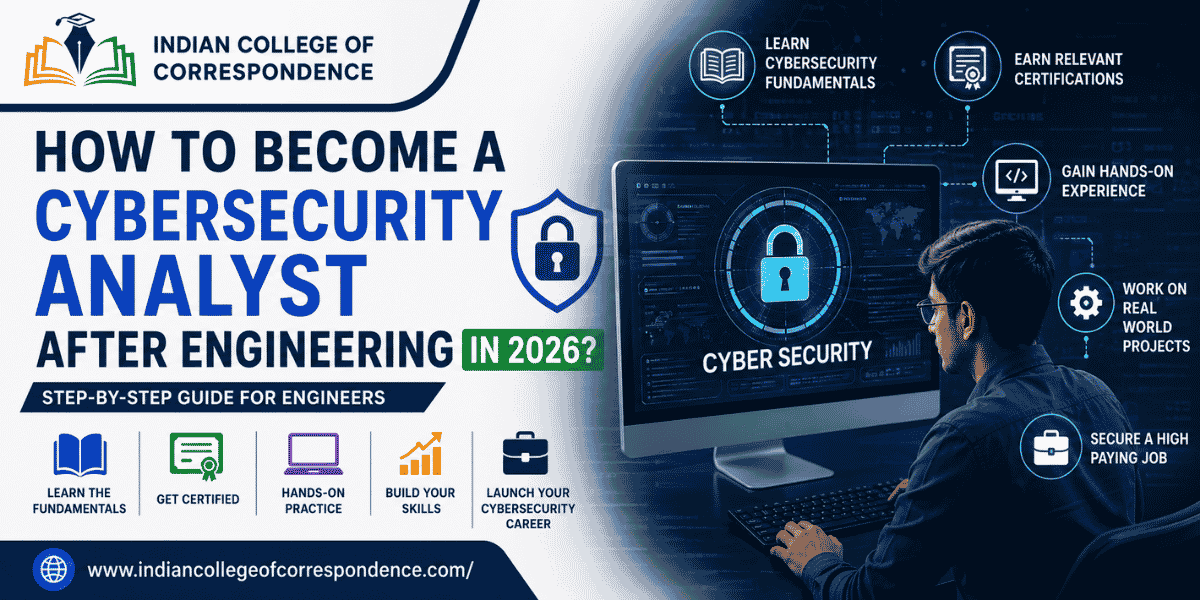
    The demand for Cybersecurity Analyst After Engineering careers has reached an all-time high as organizations across the globe face increasingly sophisticated cyber threats. If you are an engineering graduate wondering whether you can transition into cybersecurity, the answer is yes. A career as a Cybersecurity Analyst After Engineering offers excellent salary packages, global opportunities, continuous learning, and long-term job security. This guide explains everything you need to know about becoming a Cybersecurity Analyst After Engineering, including required skills, certifications, job roles, salary expectations, and career growth in 2026. Whether you are a fresher or planning to upskill after graduation, this roadmap will help you confidently enter one of the world’s fastest-growing technology careers.

    Why Cybersecurity Is the Smartest Career Choice for Engineers in 2026?

    Cybersecurity has become one of the most critical areas in today’s digital world. Every organization, from startups to multinational companies, depends on secure networks, cloud platforms, and digital systems to protect sensitive information. As cybercrime continues to evolve, businesses need skilled professionals who can detect threats, prevent attacks, and strengthen digital security. This makes becoming a Cybersecurity Analyst After Engineering an excellent career decision. Engineering graduates already possess analytical thinking, technical knowledge, logical reasoning, and problem-solving abilities—skills that are directly transferable to cybersecurity. The demand for cybersecurity professionals is increasing across:
    • Banking
    • Healthcare
    • Government
    • Defence
    • Manufacturing
    • IT Companies
    • Cloud Computing
    • E-commerce
    • Telecommunications
    • Education
    Students pursuing Engineering distance education can also build successful cybersecurity careers by combining their engineering knowledge with industry certifications, practical labs, and hands-on security projects.

    Why Engineering Graduates Have an Advantage?

    Engineering students are already familiar with many concepts used in cybersecurity. These include:
    • Computer Networks
    • Programming
    • Database Management
    • Operating Systems
    • Software Development
    • System Architecture
    Because of this technical background, engineering graduates often learn cybersecurity concepts faster than candidates from non-technical disciplines. Whether you studied Computer Science, Electronics, Information Technology, Mechanical Engineering, Civil Engineering, or Electrical Engineering, you can successfully become a Cybersecurity Analyst After Engineering with the right learning path. Graduates from a B.Tech correspondence college in India can further improve their employability by earning globally recognized cybersecurity certifications and developing practical security skills through virtual labs and real-world projects.

    Growing Demand for Cybersecurity Professionals

    According to industry reports, organizations worldwide continue investing heavily in cybersecurity due to:
    • Cloud adoption
    • AI-powered cyber attacks
    • Digital banking
    • Remote work
    • IoT devices
    • Data privacy regulations
    • Ransomware threats
    This increasing demand ensures excellent job security for professionals choosing the Cybersecurity Analyst After Engineering career path. Companies are actively hiring fresh graduates who demonstrate practical knowledge through certifications, Capture The Flag (CTF) competitions, internships, and cybersecurity portfolios.

    Why Engineering Graduates Fit Cybersecurity Roles?

    Engineering Skill Cybersecurity Application
    Programming Security Automation
    Networking Network Security
    Problem Solving Threat Analysis
    Database Knowledge Data Protection
    Operating Systems System Security
    Analytical Thinking Incident Investigation

    What Does a Cybersecurity Analyst Do?

    A Cybersecurity Analyst After Engineering is responsible for protecting an organization’s digital infrastructure from cyber threats. Their daily responsibilities include:

    Monitoring Security Systems

    They continuously monitor networks, servers, firewalls, and security software for suspicious activity.

    Detecting Threats

    Cybersecurity Analysts identify malware, phishing attempts, ransomware attacks, and unauthorized access before major damage occurs.

    Vulnerability Assessment

    Professionals regularly scan systems to identify weaknesses that hackers could exploit.

    Incident Response

    When cyber attacks occur, analysts investigate the source, minimize damage, recover systems, and prevent future attacks.

    Security Compliance

    Organizations must follow industry regulations and security standards. Cybersecurity Analysts ensure compliance with:
    • ISO 27001
    • GDPR
    • PCI DSS
    • HIPAA
    • NIST Framework

    Reporting

    Analysts prepare detailed security reports for management, explaining risks and recommending improvements. These responsibilities make the Cybersecurity Analyst After Engineering role both challenging and rewarding.

    Skills Required to Become a Cybersecurity Analyst

    Success in cybersecurity depends on building a combination of technical expertise and professional skills.

    Technical Skills

    Python Programming

    Python is widely used for:
    • Automation
    • Security Testing
    • Malware Analysis
    • Scripting

    Networking

    Understanding networking concepts is essential. Topics include:
    • TCP/IP
    • DNS
    • VPN
    • Routing
    • Switching
    • Firewalls

    Linux

    Many cybersecurity tools run on Linux operating systems. Students should become comfortable using:
    • Kali Linux
    • Ubuntu
    • Command Line

    Cloud Security

    Cloud computing continues to grow rapidly. Learn:
    • AWS Security
    • Microsoft Azure Security
    • Google Cloud Security

    Ethical Hacking Basics

    Understanding how attackers think helps analysts build stronger defenses. Important concepts include:
    • Penetration Testing
    • Vulnerability Assessment
    • Web Security
    • Wireless Security

    SIEM Tools

    Security Information and Event Management platforms help detect cyber threats. Popular tools include:
    • Splunk
    • IBM QRadar
    • Microsoft Sentinel

    Soft Skills

    A successful Cybersecurity Analyst After Engineering should also develop:
    • Critical Thinking
    • Communication
    • Team Collaboration
    • Decision Making
    • Time Management
    • Continuous Learning
    Technical knowledge alone is not enough. Employers value professionals who can explain security risks clearly and work effectively across teams.

    Step-by-Step Roadmap to Become a Cybersecurity Analyst After Engineering

    Instead of learning random tools, follow a structured roadmap.

    Step 1: Learn Networking Fundamentals

    Master concepts such as:
    • IP Addressing
    • Routing
    • Switching
    • DNS
    • Firewalls

    Step 2: Understand Operating Systems

    Become comfortable with:
    • Windows Administration
    • Linux Administration

    Step 3: Learn Python

    Develop scripting skills for automation and security analysis.

    Step 4: Study Cybersecurity Fundamentals

    Focus on:
    • Information Security
    • Cryptography
    • Authentication
    • Network Security
    • Access Control

    Step 5: Practice Through Labs

    Use platforms such as:
    • TryHackMe
    • Hack The Box
    • PortSwigger Academy
    Practical experience is essential for becoming a successful Cybersecurity Analyst After Engineering.

    Step 6: Build a Portfolio

    Include:
    • Vulnerability Assessments
    • Security Reports
    • Python Scripts
    • Lab Projects
    • GitHub Repository
    A strong portfolio often makes a candidate stand out during interviews. Students exploring correspondence college in India options can strengthen their academic qualifications while simultaneously building practical cybersecurity expertise through certifications and independent lab practice.

    Cybersecurity Analyst Course

    Choosing the right learning path is one of the most important steps toward becoming a successful Cybersecurity Analyst After Engineering. While an engineering degree provides technical fundamentals, cybersecurity requires specialized knowledge in networking, operating systems, ethical hacking, cloud security, and incident response. The ideal course should combine theoretical concepts with practical lab exercises, allowing students to solve real-world security challenges.

    Best Cybersecurity Courses in 2026

    • Google Cybersecurity Professional Certificate
    • CompTIA Security+
    • Certified Ethical Hacker (CEH)
    • Cisco Certified CyberOps Associate
    • Microsoft SC-900 Security Certification
    • AWS Certified Security – Specialty
    • Certified Information Systems Security Professional (CISSP) (for experienced professionals)
    • EC-Council Certified SOC Analyst (CSA)
    These certifications strengthen your profile and increase your chances of securing a Cybersecurity Analyst After Engineering role in reputed organizations. Students interested in distance education in Bangalore can pursue these globally recognized certifications alongside their academic programs, making their profiles more competitive in today’s technology-driven job market.

    Free Platforms to Learn Cybersecurity

    Before investing in paid certifications, beginners can start learning through free platforms. Some excellent resources include:
    • TryHackMe
    • Hack The Box
    • Cisco Skills for All
    • Microsoft Learn
    • Google Cybersecurity Learning Resources
    • OWASP Web Security Project
    • PortSwigger Web Security Academy
    Practicing on these platforms builds confidence while developing practical security skills.

    Essential Tools Every Beginner Should Learn

    Cybersecurity Analysts regularly work with professional security tools. Popular beginner-friendly tools include:
    • Wireshark
    • Nmap
    • Burp Suite
    • Metasploit Framework
    • Nessus
    • Kali Linux
    • Splunk
    • OpenVAS
    Learning these tools helps aspiring Cybersecurity Analyst After Engineering professionals understand how organizations detect vulnerabilities and defend against cyber threats.

    Build a Strong Cybersecurity Portfolio

    Recruiters increasingly value practical work over certificates alone. Your portfolio should include:
    • Network Security Labs
    • Vulnerability Assessment Reports
    • Python Security Scripts
    • Security Automation Projects
    • Linux Administration Tasks
    • Threat Detection Exercises
    • Capture The Flag (CTF) Participation
    • GitHub Repository
    A strong portfolio demonstrates practical expertise and significantly improves interview opportunities.

    Cybersecurity Analyst Job

    One of the biggest advantages of becoming a Cybersecurity Analyst After Engineering is the variety of career paths available across industries. Cybersecurity professionals are needed wherever organizations manage digital systems and sensitive information. Popular entry-level job roles include:

    Security Operations Center (SOC) Analyst

    SOC Analysts continuously monitor security systems, detect threats, and respond to cyber incidents.

    Information Security Analyst

    These professionals assess organizational security risks and recommend protective measures.

    Vulnerability Assessment Analyst

    They identify system weaknesses before attackers exploit them.

    Incident Response Analyst

    Incident Response professionals investigate cyber attacks, recover systems, and strengthen security after incidents.

    Network Security Analyst

    These specialists secure enterprise networks by managing firewalls, intrusion detection systems, VPNs, and access controls.

    Cloud Security Analyst

    As businesses move to cloud platforms, demand for cloud security specialists continues to grow rapidly.

    Governance, Risk & Compliance (GRC) Analyst

    GRC professionals ensure organizations comply with security standards and industry regulations. These diverse opportunities make the Cybersecurity Analyst After Engineering career path highly flexible and future-ready.

    Industries Hiring Cybersecurity Analysts

    Cybersecurity professionals are recruited across almost every sector. Top industries include:
    • Banking & Financial Services
    • Information Technology
    • Healthcare
    • Government
    • Defence
    • Telecommunications
    • Manufacturing
    • Retail
    • E-commerce
    • Insurance
    • Cloud Service Providers
    • Consulting Companies
    Students enhancing their technical expertise through IT distance education can further improve their readiness for these industry roles by combining academic learning with hands-on cybersecurity practice and certifications.

    Top Companies Hiring Cybersecurity Professionals

    Leading employers include:
    • Google
    • Microsoft
    • Amazon
    • IBM
    • Cisco
    • Deloitte
    • Accenture
    • Infosys
    • TCS
    • Wipro
    • HCLTech
    • Palo Alto Networks
    • EY
    • Capgemini
    • Oracle
    These organizations regularly recruit skilled cybersecurity professionals who possess practical experience, certifications, and strong analytical skills.

    Best Cybersecurity Certifications Comparison

    Certification Beginner Friendly Duration Best For
    Google Cybersecurity Professional Certificate Yes 4–6 Months Beginners
    CompTIA Security+ Yes 2–3 Months Entry-Level Security Jobs
    CEH Intermediate 3–4 Months Ethical Hacking
    Cisco CyberOps Associate Intermediate 3 Months SOC Analyst
    AWS Security Specialty Intermediate 3 Months Cloud Security
    CISSP Advanced Experience Required Senior Security Roles

    Career Growth Path

    A typical Cybersecurity Analyst After Engineering career progression looks like this:
    • Cybersecurity Intern
    • Junior Security Analyst
    • SOC Analyst
    • Cybersecurity Analyst
    • Security Engineer
    • Penetration Tester
    • Security Consultant
    • Cloud Security Engineer
    • Security Architect
    • Chief Information Security Officer (CISO)
    Each stage offers higher responsibilities, better salary packages, and opportunities to specialize in areas such as cloud security, ethical hacking, digital forensics, or threat intelligence. Students planning higher technical education through an M.Tech correspondence college in Karnataka can further enhance their expertise in advanced cybersecurity concepts, research, and security architecture while continuing to build practical industry skills.

    Cybersecurity Analyst Salary

    One of the biggest reasons graduates choose the Cybersecurity Analyst After Engineering career path is the excellent salary potential. As cyber threats continue to increase, organizations are investing heavily in skilled professionals who can secure networks, applications, cloud platforms, and sensitive business data. The salary of a Cybersecurity Analyst depends on several factors, including technical skills, certifications, practical experience, employer, and location.

    Average Cyber Security Analyst Salary in India

    • Freshers (0–2 Years): ₹5–9 LPA
    • Mid-Level Professionals (3–5 Years): ₹10–18 LPA
    • Senior Cyber Security Analysts (6–10 Years): ₹18–30 LPA
    • Security Architects & Cybersecurity Managers: ₹35 LPA+
    Professionals specializing in Cloud Security, Ethical Hacking, Threat Intelligence, and Incident Response often receive higher salary packages due to increasing market demand. Students pursuing Engineering distance education can improve their earning potential by combining their academic qualifications with globally recognized cybersecurity certifications, internships, and real-world security projects.

    Factors That Increase Your Salary

    Your salary as a Cybersecurity Analyst After Engineering can grow significantly if you focus on:
    • Professional Certifications
    • Practical Lab Experience
    • GitHub Security Portfolio
    • Programming Skills
    • Cloud Security Knowledge
    • Incident Response Expertise
    • Security Automation
    • Linux Administration
    • Continuous Learning
    Employers highly value professionals who can solve real security problems instead of relying only on theoretical knowledge.

    Cybersecurity Analyst Interview Questions

    Preparing for interviews is one of the final steps toward becoming a successful Cybersecurity Analyst After Engineering. Recruiters evaluate both technical expertise and problem-solving ability. Here are some commonly asked interview questions:

    Technical Questions

    • What is Cybersecurity?
    • Explain the CIA Triad.
    • What is the difference between a Firewall and Antivirus?
    • What is SQL Injection?
    • Explain Cross-Site Scripting (XSS).
    • What is Multi-Factor Authentication?
    • What are Common Network Protocols?
    • Difference between IDS and IPS.
    • What is Encryption?
    • Explain VPN.

    Practical Questions

    • How would you investigate a phishing attack?
    • What would you do if ransomware infected a company network?
    • How would you secure a cloud server?
    • Describe a cybersecurity project you’ve completed.
    • How do you stay updated on new cyber threats?

    HR Questions

    • Why do you want to become a Cybersecurity Analyst?
    • Why should we hire you?
    • Describe a difficult technical challenge you solved.
    • How do you handle pressure?
    • Where do you see yourself in five years?
    Building practical projects greatly improves confidence during interviews for Cybersecurity Analyst After Engineering positions.

    Future Scope of Cybersecurity in 2026 and Beyond

    Cybersecurity is expected to remain one of the fastest-growing technology domains over the next decade. Businesses worldwide continue adopting cloud computing, artificial intelligence, IoT devices, blockchain, and remote work environments, all of which require stronger digital security. The future demand for Cybersecurity Analyst After Engineering professionals will continue rising because organizations need experts capable of protecting digital assets from evolving cyber threats. Emerging cybersecurity fields include:
    • Cloud Security
    • AI Security
    • Zero Trust Security
    • IoT Security
    • Threat Intelligence
    • Digital Forensics
    • Cyber Risk Management
    • DevSecOps
    • Identity & Access Management
    • Security Automation
    This makes cybersecurity one of the safest long-term technology careers for engineering graduates. Graduates from a B.Tech correspondence college in India can also successfully enter these specialized domains by continuously upgrading their technical skills and earning industry-recognized certifications.

    Why Choose ICC for Career Growth?

    Choosing the right educational foundation plays an important role in building a successful technology career. ICC supports students by offering flexible academic opportunities that help learners continue their education while developing industry-relevant skills. Whether you are looking for a trusted correspondence college in India, planning higher studies through an M.Tech correspondence college in Karnataka, or exploring flexible learning opportunities through distance education in Bangalore, ICC provides programs that support career growth without interrupting your professional journey. Students can combine academic qualifications with cybersecurity certifications, internships, and hands-on projects to become industry-ready professionals. ICC encourages continuous learning, practical skill development, and career-focused education that prepares graduates for emerging technology roles.

    Conclusion

    Cybersecurity has become one of the most rewarding technology careers for engineering graduates. Organizations worldwide need skilled professionals capable of protecting digital infrastructure from constantly evolving cyber threats. This guide on Cybersecurity Analyst After Engineering explained the complete roadmap—from required skills and certifications to salary, interview preparation, career opportunities, and future scope. By learning networking, Linux, Python, cloud security, ethical hacking, and practical cybersecurity tools while building real-world projects, engineering graduates can successfully establish themselves in this high-demand profession. Continuous learning, certifications, and hands-on experience remain the keys to long-term success as a Cybersecurity Analyst After Engineering.

    Build Your Cybersecurity Career with ICC

    Cybersecurity continues to create exciting opportunities for engineering graduates across IT, banking, healthcare, government, manufacturing, cloud computing, and global technology companies. If you are planning to become a Cybersecurity Analyst After Engineering, now is the perfect time to strengthen your technical knowledge, earn professional certifications, and build practical security experience. Indian College of Correspondence helps students combine flexible education with career-focused learning so they can confidently prepare for future-ready technology careers. Contact ICC today and take the first step toward becoming a skilled Cybersecurity professional.

    FAQs

    1. Can an engineering graduate become a Cybersecurity Analyst?

    Yes. Engineering graduates have an excellent foundation for building a successful cybersecurity career because they already possess knowledge of programming, networking, databases, operating systems, and logical problem-solving. These technical skills make the transition into cybersecurity much smoother compared to non-technical fields. To become a Cybersecurity Analyst After Engineering, graduates should learn Python, Linux, cloud security, ethical hacking, and incident response while earning globally recognized certifications such as CompTIA Security+ or CEH. Students pursuing Engineering distance education can also prepare effectively by combining flexible learning with hands-on labs, internships, Capture The Flag competitions, and cybersecurity projects that demonstrate practical skills to employers.

    2. Which engineering branch is best for Cybersecurity?

    There is no single “best” engineering branch for cybersecurity because professionals from various disciplines successfully enter this field. Computer Science and Information Technology graduates may have an advantage due to their programming background, but Electronics, Electrical, Mechanical, Civil, and Electronics & Communication graduates can also excel by learning cybersecurity concepts. Employers focus more on practical skills, certifications, and real-world experience than on specialization. Students studying through a B.Tech correspondence college in India can strengthen their cybersecurity profile by learning networking, Linux, ethical hacking, cloud security, Python programming, and security tools while building strong GitHub portfolios and participating in cybersecurity competitions.

    3. Which Cybersecurity certification is best after engineering?

    The best cybersecurity certification depends on your career goals and current skill level. Beginners should consider Google Cybersecurity Professional Certificate or CompTIA Security+, while intermediate learners can pursue Certified Ethical Hacker (CEH), Cisco CyberOps Associate, Microsoft Security certifications, or AWS Security Specialty. These programs combine theoretical knowledge with practical security exercises that employers value. Choosing certifications aligned with your preferred specialization—whether cloud security, ethical hacking, or SOC operations—greatly improves employability. Completing hands-on labs and practical projects alongside certifications creates a strong foundation for anyone planning a successful Cybersecurity Analyst After Engineering career in 2026 and beyond.

    4. What is the average Cybersecurity Analyst Salary in India?

    Cybersecurity professionals enjoy excellent salary packages because demand continues to grow across industries. Fresh Cybersecurity Analysts generally earn between ₹5–9 LPA, while professionals with three to five years of experience often receive ₹10–18 LPA. Senior specialists in cloud security, penetration testing, AI security, and digital forensics frequently earn ₹20 LPA or more depending on expertise and employer. Salary growth depends on certifications, technical skills, practical projects, and work experience. Students improving their technical capabilities through IT distance education while completing cybersecurity certifications and internships can significantly increase their earning potential in India’s expanding cybersecurity job market.

    5. Can distance education students get cybersecurity jobs?

    Absolutely. Today’s recruiters prioritize technical expertise, certifications, practical experience, and problem-solving abilities rather than the mode of education. Students pursuing distance education in Bangalore can successfully prepare for cybersecurity careers by learning networking, Linux, Python, cloud security, ethical hacking, and security operations alongside their academic studies. Building GitHub portfolios, participating in Capture The Flag competitions, completing internships, and earning industry-recognized certifications demonstrate practical capabilities that employers highly value. With continuous learning and hands-on experience, distance education graduates can compete confidently with traditional classroom students for entry-level and advanced cybersecurity positions.

    6. Which companies hire Cybersecurity Analysts?

    Cybersecurity Analysts are recruited by leading technology companies, financial institutions, consulting firms, healthcare organizations, manufacturing companies, and government agencies. Top employers include Google, Microsoft, Amazon, IBM, Cisco, Infosys, TCS, Wipro, Deloitte, Accenture, EY, Oracle, Palo Alto Networks, HCLTech, and numerous cybersecurity startups. These organizations seek candidates with expertise in cloud security, Linux, networking, ethical hacking, threat detection, and incident response. Building a strong portfolio, earning globally recognized certifications, and continuously updating cybersecurity knowledge significantly improve your chances of securing interviews and long-term career opportunities with these leading employers.

    7. Is Cybersecurity a good career in 2026?

    Yes. Cybersecurity continues to rank among the fastest-growing technology careers because organizations worldwide face increasingly sophisticated cyber threats. Businesses are investing heavily in cloud security, Zero Trust architecture, AI-powered threat detection, digital forensics, and security automation to protect their systems and customer data. This creates strong demand for skilled Cybersecurity Analysts, Security Engineers, Penetration Testers, and Cloud Security Specialists. Professionals who continuously improve their technical knowledge, complete industry certifications, and gain practical experience through security projects can expect excellent salary growth, international career opportunities, and long-term job stability in this rapidly evolving industry.

    8. How can engineering students prepare for Cybersecurity jobs?

    Engineering students should begin by strengthening their understanding of networking, operating systems, Linux, Python programming, cloud computing, and cybersecurity fundamentals. Practical learning is equally important, so they should participate in platforms like TryHackMe, Hack The Box, and Capture The Flag competitions while building GitHub portfolios that showcase real-world security projects. Completing certifications such as CompTIA Security+, Google Cybersecurity Professional Certificate, or CEH further improves employability. Students planning higher education through an M.Tech correspondence college in Karnataka can deepen their expertise in advanced cybersecurity, AI-driven security, cloud infrastructure, and digital forensics while preparing for leadership roles in the future.

Leave A Comment