Admission opens for 2026-27 sessions for all university.

Blog Detail

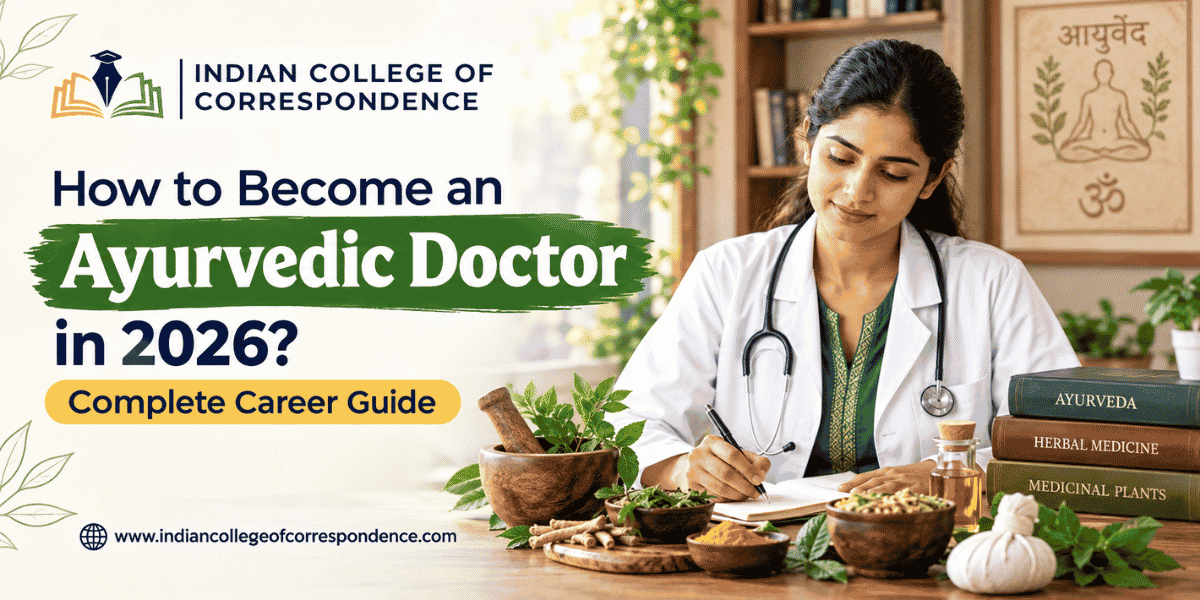
  • How to Become an Ayurvedic Doctor in 2026? Complete Career Guide

    • 30,Sep 2026
    • Posted By : opsadsthrivein@gmail.com opsadsthrivein@gmail.com
    • 0 Comments
    • B.Sc correspondence college in Karnataka
    • correspondence college in india
    • Science distance education in Bangalore
    Choosing a healthcare career is a decision that deserves more than a quick look at a course name. If you are interested in traditional Indian healthcare, patient care, natural approaches to wellness, and medical science, you may be wondering how to Become an Ayurvedic Doctor in 2026. Ayurveda offers a professional path through the Bachelor of Ayurvedic Medicine and Surgery (BAMS), followed by practical training and the applicable registration requirements. For students planning their future after Class 12, understanding the complete journey is important. You need to know the academic requirements, entrance examination, BAMS structure, clinical exposure, internship, career possibilities, and options for higher studies. This guide explains the pathway in simple language so that you can understand what it takes to Become an Ayurvedic Doctor and build a career in this field.

    Why Are Students Choosing Ayurveda as a Career?

    Before learning how to Become an Ayurvedic Doctor, it helps to understand what makes Ayurveda different from many other healthcare paths. Ayurveda is based on a traditional Indian system of medicine, but professional Ayurvedic education also includes relevant modern medical sciences. Students entering BAMS therefore spend years developing knowledge across Ayurvedic principles, clinical subjects and practical healthcare. The career can suit students who enjoy:
    • Learning about health and human biology
    • Understanding traditional systems of medicine
    • Communicating with patients
    • Studying medicines and therapeutic approaches
    • Developing clinical knowledge
    • Continuing their education after graduation
    The decision should be based on genuine interest rather than simply following a trend. If you want to Become an Ayurvedic Doctor, you should be prepared for a professional healthcare education that requires regular study, practical learning and clinical responsibility.

    What Does an Ayurvedic Doctor Do?

    Many students search how to Become an Ayurvedic Doctor without first understanding what the profession involves. An Ayurvedic doctor may work with patients by taking their health history, assessing their concerns, developing appropriate treatment plans within their professional scope, providing health and lifestyle guidance, and monitoring progress. Depending on their qualifications and work setting, Ayurvedic professionals may also work in hospitals, clinics, research organisations, educational institutions, wellness settings and Ayurvedic healthcare organisations. The work is not limited to reading about herbs or traditional remedies. Professional education involves structured academic learning and clinical training. This is why the route to Become an Ayurvedic Doctor begins with the appropriate professional degree rather than a short-term certificate.

    The Real Roadmap to Become an Ayurvedic Doctor

    If you want to Become an Ayurvedic Doctor, think of the journey as a series of connected stages: Class 12 → NEET-UG → BAMS admission → Academic study → Clinical training → Compulsory internship → Applicable registration → Professional career For the 2026 admission cycle, the National Testing Agency states that NEET-UG is the common entrance examination for undergraduate BAMS admissions. The current NEET information also specifies 10+2-level eligibility with Physics, Chemistry and Biology or Biotechnology for these courses.

    Step 1: Complete Your Class 12 Education

    The first academic milestone to Become an Ayurvedic Doctor is completing the required senior secondary education. Students planning for BAMS should pay particular attention to the science subjects required under the applicable admission rules. Biology is especially relevant because later studies involve human anatomy, physiology and other health-science concepts. Students looking for distance Msc degree college in Bangalore or other flexible learning options should carefully check whether the qualification they pursue meets the current eligibility requirements for BAMS admission. Similarly, a 12thPUC correspondence college in Bangalore may be relevant to someone completing school-level education through a flexible route, but the student must verify that the qualification and subjects satisfy the current BAMS admission requirements.

    Step 2: Prepare for NEET-UG

    The next major stage to Become an Ayurvedic Doctor is NEET-UG. For 2026, the NTA confirms that NEET-UG applies to undergraduate BAMS admissions under the Indian System of Medicine framework. Preparation generally involves:
    • Physics
    • Chemistry
    • Biology
    • Regular revision
    • Practice questions
    • Mock tests
    • Time management
    The purpose of this stage is not simply to pass another examination. It is the entrance point into the professional education pathway.

    Step 3: Choose a Recognised BAMS Programme

    After qualifying through the applicable admission process, students can participate in counselling and seat allocation. For the 2026–27 session, AACCC states that eligible candidates who qualify NEET-UG and seek BAMS admission can participate in its UG counselling for applicable All India Quota and other covered seats. When choosing a college, students should examine:
    • Recognition and regulatory status
    • Curriculum
    • Faculty
    • Hospital facilities
    • Clinical exposure
    • Internship arrangements
    • Library and laboratory facilities
    • Student support
    • Fee structure
    A recognised programme and meaningful practical exposure are important parts of the journey to Become an Ayurvedic Doctor.

    What Is BAMS and How Long Does It Take?

    BAMS stands for Bachelor of Ayurvedic Medicine and Surgery. It is the principal undergraduate professional degree associated with the Ayurvedic medical pathway. The National Institute of Ayurveda describes BAMS as a 5½-year undergraduate programme, consisting of 4½ years of academic study followed by one year of compulsory rotatory internship. This means students should not think of the course as a short route into healthcare. To Become an Ayurvedic Doctor, you need to commit to several years of academic and practical preparation.

    What Will You Learn During BAMS?

    Understanding the BAMS syllabus can make the decision to Become an Ayurvedic Doctor much clearer. The programme combines Ayurvedic knowledge with relevant modern medical sciences. Students study areas connected with the human body, disease, medicines, diagnosis, treatment and clinical practice. Depending on the stage of the programme, students encounter subjects and areas such as:
    • Ayurvedic fundamentals
    • Sanskrit and classical Ayurvedic literature
    • Anatomy
    • Physiology
    • Pathology
    • Pharmacology-related learning
    • Ayurvedic pharmacology and medicines
    • Internal medicine
    • Surgery-related concepts
    • Panchakarma
    • Preventive and social medicine
    • Clinical subjects
    The National Institute of Ayurveda notes that the programme is designed to provide knowledge of Ayurvedic principles alongside relevant modern medical sciences to prepare students for professional practice. This combination is one reason the path to Become an Ayurvedic Doctor requires consistent effort rather than relying only on an interest in traditional medicine.

    BAMS Journey at a Glance

    Stage What Happens Main Goal
    Class 12 Complete required subjects Build the academic foundation
    NEET-UG Take the required entrance examination Become eligible for BAMS admission
    Admission Participate in applicable counselling Secure a BAMS seat
    BAMS Complete academic and clinical education Develop professional knowledge
    Internship Complete compulsory practical training Gain supervised experience
    Registration Fulfil applicable professional requirements Progress toward lawful practice
    Career Choose employment or further study Build a professional pathway

    Why Clinical Training Matters?

    A student cannot fully understand what it means to Become an Ayurvedic Doctor by studying textbooks alone. Clinical exposure allows students to see how healthcare knowledge is applied in real situations. During training, students may observe patient consultations, learn documentation practices, discuss cases, understand clinical procedures and develop communication skills under appropriate supervision. The internship is particularly important. The BAMS structure includes one year of compulsory rotatory internship, making practical exposure a formal part of professional education. Students who are serious about becoming healthcare professionals should therefore look beyond the course title and examine the quality of clinical facilities available through the institution.

    What Skills Help You Become an Ayurvedic Doctor?

    Academic qualifications are essential, but professional healthcare also requires personal and practical skills. If you want to Become an Ayurvedic Doctor, work on:

    Patient Communication

    A doctor needs to listen carefully and explain information in language that patients can understand.

    Observation

    Healthcare involves paying attention to symptoms, patient history and changes over time.

    Scientific Learning

    Students must be comfortable studying biology, medical concepts, medicines and clinical subjects.

    Patience

    Healthcare interactions can involve repeated consultations and long-term patient relationships.

    Ethical Practice

    Professional responsibility matters whenever you work with people’s health.

    Continuous Learning

    Healthcare keeps developing, so completing a degree should not be treated as the end of education.

    What About Distance Education and Ayurveda?

    This is an important point for students researching flexible education. Searches for B.Sc correspondence college in Karnataka, distance Msc degree college in Bangalore, and Traditional distance education in Bangalore may appear alongside healthcare career searches. However, these are not substitutes for the regulated BAMS professional pathway when the goal is to Become an Ayurvedic Doctor. Likewise, students researching a correspondence college in India should distinguish between general academic programmes and professional medical education. Distance education can be useful for many academic and career goals, but students should never assume that completing a general science, postgraduate or correspondence programme automatically provides eligibility to practise as an Ayurvedic doctor. Before enrolling, always check the current regulatory and admission requirements for the exact professional qualification you intend to pursue.

    Where Can You Work After BAMS?

    Once you Become an Ayurvedic Doctor, your career does not have to follow only one direction.

    Ayurvedic Hospitals

    Hospitals can provide opportunities for patient-facing work and clinical experience.

    Private Clinics

    Some graduates choose clinical practice after fulfilling the applicable professional requirements.

    Government Healthcare

    Government healthcare systems may provide opportunities through applicable recruitment processes and positions.

    Research

    Students interested in evidence, medicines, clinical studies or academic investigation can explore research-related careers.

    Teaching

    Those who enjoy education may pursue higher qualifications and eventually move toward academic roles.

    Wellness Organisations

    Ayurveda professionals may also work in wellness-oriented organisations, depending on their qualifications and professional scope.

    Ayurvedic Pharmaceutical Sector

    The Ayurvedic healthcare product sector can offer opportunities in areas such as product knowledge, quality-related functions, research and other professional roles. These options show why the decision to Become an Ayurvedic Doctor can lead to several different professional directions.

    Career Options After BAMS

    Career Area What You May Explore
    Clinical Practice Patient consultations and healthcare services
    Hospitals Clinical and patient-care roles
    Government Sector Applicable healthcare positions
    Research Ayurveda and healthcare research
    Teaching Academic and educational roles
    Pharmaceuticals Ayurveda-related industry roles
    Wellness Qualified wellness-focused services
    Higher Studies Advanced Ayurveda education

    Can You Study Further After BAMS?

    Yes. Completing BAMS does not necessarily mean that your academic journey has ended. If you want to Become an Ayurvedic Doctor and later develop deeper expertise, postgraduate education can be considered according to your interests and eligibility. Possible directions include postgraduate Ayurveda programmes, research and academic development. NITI Aayog notes that graduates of the Indian systems of medicine may pursue postgraduate degrees such as MD/MS in Ayurveda, subject to the applicable regulatory framework. Students interested in broader science education may also encounter programmes advertised as a distance Msc degree college in Bangalore or other postgraduate learning options. However, they should distinguish general postgraduate education from regulated clinical qualifications.

    Is Ayurveda Only About Traditional Knowledge?

    One common misunderstanding is that studying Ayurveda means learning only traditional remedies. Professional BAMS education is broader. The curriculum includes Ayurvedic principles alongside relevant modern medical sciences. This means students should be ready to study scientific and clinical concepts while also engaging with classical Ayurvedic knowledge. That balance is important for anyone who wants to Become an Ayurvedic Doctor and work responsibly within the professional framework.

    How to Choose the Right BAMS College?

    The institution you choose can influence your learning experience, so avoid selecting a college only because of advertisements or promises. Before admission, check:
    1. Whether the programme has the required recognition.
    2. Whether the college has appropriate teaching facilities.
    3. Whether students receive meaningful hospital exposure.
    4. How the internship is organised.
    5. What the curriculum covers.
    6. Whether faculty members have relevant qualifications.
    7. What fees and other expenses apply.
    8. Whether the admission process follows applicable regulations.
    For students exploring higher education options, ICC can also be considered as an education resource when researching broader academic pathways, but students seeking to Become an Ayurvedic Doctor should verify BAMS-specific eligibility and regulatory requirements before selecting a professional programme.

    Common Mistakes Students Should Avoid

    The journey to Become an Ayurvedic Doctor can become confusing when students rely on incomplete information. Avoid these common mistakes:

    Choosing a Course Without Checking Recognition

    Always verify the current recognition and regulatory status of the professional programme.

    Assuming Any Science Degree Leads to BAMS Practice

    A B.Sc or M.Sc is not automatically a substitute for the BAMS pathway.

    Ignoring NEET Requirements

    For 2026 undergraduate BAMS admissions, NEET-UG remains the common entrance route.

    Focusing Only on Course Duration

    The learning experience, clinical exposure and internship matter just as much as the number of years.

    Treating Distance Education as a Shortcut

    Flexible education may suit some academic goals, but it should not be confused with the professional training required to Become an Ayurvedic Doctor.

    What Should You Do After Class 12 If Ayurveda Interests You?

    If you are currently in Class 12 or have recently completed it, start by checking the latest eligibility requirements for the admission year. Then create a simple plan: Check subjects → Prepare for NEET-UG → Research recognised BAMS institutions → Understand counselling → Compare facilities → Join BAMS → Complete academic study → Complete internship → Fulfil registration requirements This approach gives you a clearer picture of what it takes to Become an Ayurvedic Doctor instead of relying on scattered information from different websites.

    Is Becoming an Ayurvedic Doctor Right for You?

    There is no single career that suits every student. If you genuinely enjoy healthcare, have an interest in Ayurveda, are comfortable with science subjects and are willing to commit to professional education and practical training, the BAMS pathway may be worth exploring. On the other hand, if your interest is mainly in general science, research, education or another area, programmes such as Science distance education in Bangalore, a B.Sc correspondence college in Karnataka, or other academic routes may align with different career objectives. The important thing is to match the qualification with the career you actually want.

    Conclusion

    To Become an Ayurvedic Doctor in 2026, students need more than an interest in traditional medicine. The journey requires proper academic preparation, entrance qualification, professional BAMS education, clinical exposure, internship and compliance with applicable professional requirements. The most useful approach is to plan the journey one stage at a time. First build a strong science foundation, then understand the current admission process, choose an appropriate BAMS institution and take practical learning seriously. For students who genuinely want to Become an Ayurvedic Doctor, the years spent studying Ayurveda can open several professional directions, including clinical practice, research, teaching, healthcare services and further education.

    FAQs

    1. How can I Become an Ayurvedic Doctor after Class 12?

    To Become an Ayurvedic Doctor, students generally need to meet the applicable 10+2 subject requirements, qualify NEET-UG, gain admission to BAMS, complete the academic programme and compulsory internship, and fulfil applicable registration requirements.

    2. Is NEET required for BAMS in 2026?

    Yes. NTA’s NEET-UG 2026 information states that NEET-UG is the common entrance examination for undergraduate BAMS, BSMS and BUMS admissions under the applicable framework.

    3. How long is the BAMS course?

    BAMS is structured as a 5½-year undergraduate programme, including 4½ years of academic study and one year of compulsory rotatory internship.

    4. What subjects are required for BAMS?

    The current NEET-UG 2026 information specifies 10+2 education with Physics, Chemistry and Biology or Biotechnology for BAMS admission. Students should always verify the latest official requirements for their admission year.

    5. What can I do after BAMS?

    After completing BAMS and the applicable professional requirements, graduates can explore clinical practice, hospitals, government opportunities, research, teaching, wellness-related roles, the Ayurvedic pharmaceutical sector and higher education.

    Ready to Build Your Career in Ayurveda?

    If you are planning to Become an Ayurvedic Doctor, choosing the right educational path is the first step toward a rewarding healthcare career. Understand the eligibility requirements, course structure, admission process, and future opportunities before making your decision. Explore the right academic options with Indian College of Correspondence and take the next step toward turning your interest in Ayurveda into a meaningful career.

Leave A Comment