-
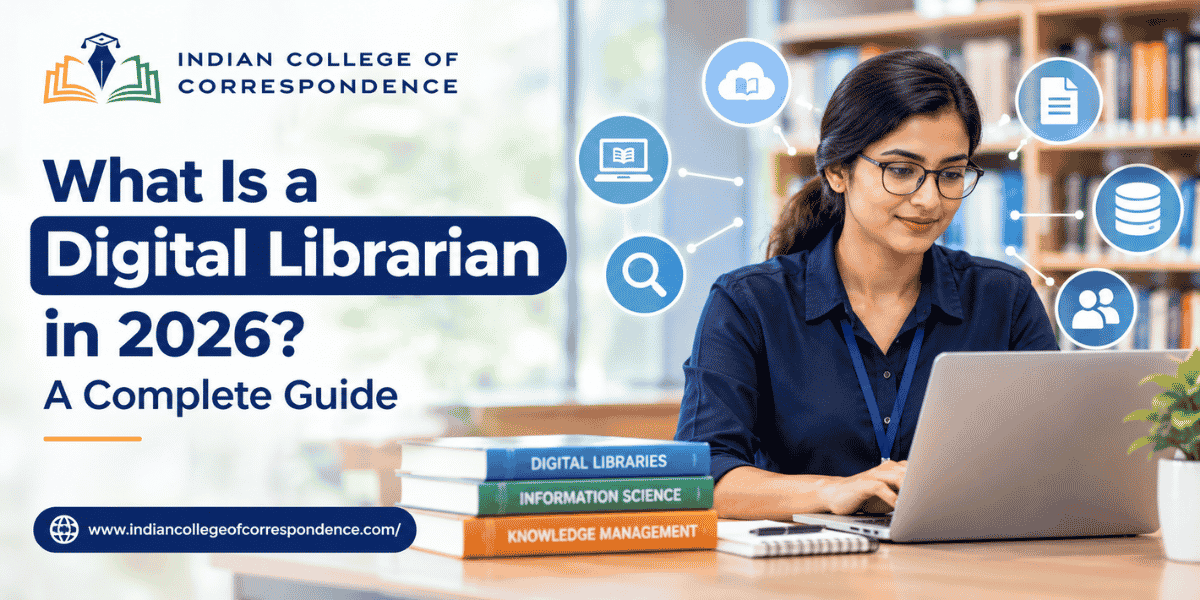
What Is a Digital Librarian in 2026? A Complete Guide
- 19,Sep 2026
- Posted By : opsadsthrivein@gmail.com opsadsthrivein@gmail.com
- 0 Comments
- distance Msc degree college in bangalore
- IT distance education
- Science distance education in Bangalore
Imagine searching for an ebook, research paper, online journal, digital archive, or academic document and finding exactly what you need within seconds. Behind this organized access to information, there are professionals who make digital resources easier to manage, discover, and use. What Is a Digital Librarian becomes an important question as libraries continue moving from shelves and printed collections toward digital platforms.
A digital librarian works with electronic resources, databases, digital collections, online repositories, metadata, and information systems. The role combines traditional library knowledge with modern technology and information-management practices.
If you are interested in technology, research, organizing information, or helping people find reliable resources, understanding What Is a Digital Librarian can help you explore an emerging area of Library and Information Science.
This guide explains the role, responsibilities, skills, qualifications, career opportunities, technologies, and future scope of digital librarianship in simple language.
What Is a Digital Librarian?
So, What Is a Digital Librarian in simple terms?
A digital librarian is an information professional who manages, organizes, preserves, and provides access to digital information resources. Instead of working only with physical books, digital librarians may work with e-books, online journals, research databases, institutional repositories, digital archives, multimedia resources, and electronic documents.
The role is closely connected with library science, information management, technology, research support, and digital preservation.
A modern librarian may therefore need to understand both traditional principles of organizing information and the digital systems used to store and retrieve it. Current library-career resources describe librarians as professionals who organize and preserve a wide range of resources, including digital materials.
In other words, What Is a Digital Librarian is not simply a question about someone who works with computers. It is about a professional who helps people find, understand, manage, and access information in a digital environment.
Why Are Digital Librarians Important in 2026?
The amount of information available online is enormous. Students, researchers, teachers, organizations, and professionals regularly use digital journals, online databases, e-books, institutional repositories, research papers, archives, and multimedia resources.
Having access to information is one thing. Finding the right information is another.
This is where digital librarians become valuable.
Understanding What Is a Digital Librarian also means understanding the problem these professionals solve. They help organize large collections so that users can locate useful resources without wasting unnecessary time.
They may also support:
- Digital collections
- Online research
- Electronic databases
- Institutional repositories
- Digital archives
- Information retrieval
- Metadata management
- Digital preservation
- Information literacy
- Library automation
The growth of digital resources has expanded library work into areas such as digital repositories, information technology, database management, and knowledge organization.
How Is a Digital Librarian Different From a Traditional Librarian?
The basic purpose of both roles is connected to information and users, but their working environments can differ.
| Traditional Library Work |
Digital Library Work |
| Physical books and journals |
E-books, databases, and digital files |
| Physical catalogues |
Online catalogues and discovery systems |
| Printed collections |
Digital collections |
| Physical preservation |
Digital preservation |
| In-person assistance |
Online and digital research support |
This does not mean traditional librarians no longer use technology. Modern libraries can combine physical and digital services, making many librarians work across both environments.
Therefore, What Is a Digital Librarian can be better understood as an evolving version of information and library work rather than a completely separate profession.
What Does a Digital Librarian Do?
Now that the basic meaning is clear, the next question is what the professional actually does during a normal working day.
The answer can vary depending on the organization, but common responsibilities include:
1. Managing Digital Collections
Digital librarians help manage electronic resources such as e-books, academic papers, journals, reports, photographs, videos, and other digital materials.
They may help decide how resources should be stored, described, accessed, and maintained.
2. Organizing Information
A digital collection becomes difficult to use when its resources are poorly organized.
Digital librarians use cataloguing, classification, indexing, and metadata practices to make information easier to find.
3. Managing Metadata
Metadata provides information about a digital resource. It can describe details such as the title, author, subject, date, format, or other characteristics.
Metadata helps users and systems understand what a resource contains and how it can be discovered.
Professional digital-library roles can specifically require knowledge of metadata standards, authority control, and digital repository platforms.
4. Supporting Research
Students and researchers often need help locating suitable journals, databases, articles, reports, or archived materials.
A digital librarian can guide users toward appropriate information sources and help them search more effectively.
5. Preserving Digital Information
Digital files also need long-term preservation.
A digital librarian may work with digital archives, backup processes, file organization, repository systems, and preservation practices to help maintain access to important resources.
6. Maintaining Digital Library Services
Digital librarians may also work with library management systems, online databases, institutional repositories, and other technologies that support electronic access to information.
This combination of information organization and technology is one reason What Is a Digital Librarian has become a relevant career question.
A Simple Example of Digital Librarian Work
Suppose a university wants to create an online collection of old research papers.
Someone needs to:
- Collect the documents.
- Digitize them if necessary.
- Add accurate information about each document.
- Organize the collection.
- Upload the resources to a repository.
- Make the collection searchable.
- Help students and researchers access it.
- Maintain the collection over time.
These responsibilities show What Is a Digital Librarian in practical terms. The professional helps turn a large group of digital files into a useful, searchable, and organized information resource.
What Skills Does a Digital Librarian Need?
The modern role requires more than an interest in books.
A person exploring What Is a Digital Librarian should understand that the profession combines technical, information, and communication skills.
Technical Skills
Important areas may include:
- Database management
- Digital library systems
- Library automation
- Metadata
- Information retrieval
- Digital repositories
- Basic web technologies
- Digital preservation
- Online research tools
Information Management Skills
Digital librarians also need to understand:
- Cataloguing
- Classification
- Indexing
- Documentation
- Research methods
- Information organization
- Source evaluation
Communication Skills
Technology alone is not enough. Digital librarians regularly support users, explain resources, answer questions, and communicate with colleagues.
Useful soft skills include:
- Communication
- Attention to detail
- Problem-solving
- Organization
- Patience
- Adaptability
Library Science education commonly covers areas such as classification, cataloguing, information sources, library management, information technology, and practical training.
What Technologies Do Digital Librarians Use?
The technology depends on the organization, but the digital library environment can involve several types of systems.
| Technology |
Main Purpose |
| Digital Library Platforms |
Store and provide access to digital collections |
| Databases |
Organize and retrieve information |
| Metadata Systems |
Describe and organize digital resources |
| Institutional Repositories |
Store and share academic materials |
| OCR Tools |
Convert scanned documents into searchable text |
| Library Automation Systems |
Manage library-related operations |
This is another practical way to understand What Is a Digital Librarian. The professional does not necessarily develop every technology from scratch but understands how digital information systems support library services.
How to Become a Digital Librarian in 2026?
If you are considering this career, your journey can begin with the right educational foundation.
Step 1: Complete Your Graduation
Many Library and Information Science programs require candidates to have completed an undergraduate degree. However, exact eligibility varies between universities and programs, so students should always check the current admission rules.
For example, current B.Lib.I.Sc. course information commonly lists graduation as an eligibility requirement.
Step 2: Study Library and Information Science
A B.Lib.I.Sc. or similar Library and Information Science qualification can introduce students to library management, classification, cataloguing, information services, digital libraries, and related areas.
Step 3: Develop Digital Skills
Do not stop with the academic qualification.
Learn about:
- Digital repositories
- Databases
- Metadata
- Digital archives
- Information retrieval
- Library automation
- Research tools
Step 4: Gain Practical Experience
Internships, projects, library training, documentation work, or digital archive projects can help students understand how information systems operate in real situations.
Step 5: Consider Higher Education
Students interested in advanced positions may explore postgraduate Library and Information Science programs or specialized certifications, depending on their career goals.
Can Students From Different Academic Backgrounds Enter This Field?
One interesting aspect of Library and Information Science is that the field can attract graduates from different academic backgrounds, depending on the eligibility rules of the institution.
For example, a student who has completed a degree in commerce, science, arts, or another discipline may explore relevant Library and Information Science programs where the admission criteria permit it.
This means a learner researching What Is a Digital Librarian does not necessarily need to have spent their entire education studying computers.
The important point is to check the eligibility criteria of the specific course before applying.
How Other Degrees Can Connect With Digital Librarianship?
Students sometimes discover the digital information field after completing another degree.
Someone researching BCA distance education in Bangalore, for example, may already have an interest in computers and digital systems. That technical foundation can be useful when learning about databases, digital platforms, and information technology.
Similarly, students exploring Science distance education in Bangalore may develop research and analytical interests that can complement information-management education.
Students looking at B.Sc correspondence college in Karnataka may also explore how science-based learning can connect with research documentation, academic resources, and information services.
The important point is that digital librarianship sits at the intersection of information, technology, research, and user services.
What About Higher Education in Information and Technology?
A graduate interested in information management may also come across options such as a distance Msc degree college in Bangalore while exploring further education.
Likewise, someone researching an MA correspondence college in India may be considering flexible higher-education options while planning their professional development.
These routes are not automatically the same as Library and Information Science qualifications. Their relevance depends on the specific career path, eligibility requirements, and skills a learner wants to develop.
The focus should therefore be on building a combination of academic knowledge + information-management skills + digital abilities.
What Career Opportunities Are Available?
Once you understand What Is a Digital Librarian, it becomes easier to see that the career area can extend beyond the traditional librarian title.
Possible roles include:
- Digital Librarian
- Librarian
- Information Specialist
- Information Scientist
- Digital Archivist
- Metadata Specialist
- Documentation Officer
- Records Manager
- Electronic Resources Librarian
- Knowledge Management Professional
- Research Support Specialist
Library Science programs and career resources list related opportunities across libraries, archives, information centres, research organizations, academic institutions, and other knowledge-based environments.
Where Can Digital Librarians Work?
Digital librarians can potentially work in environments where large amounts of information need to be organized and accessed.
Universities and Colleges
Academic institutions maintain research papers, journals, e-books, databases, theses, dissertations, and other resources.
Research Organizations
Research environments require organized access to reports, publications, datasets, and specialized information.
Public Libraries
Many public libraries now provide digital resources alongside physical collections.
Archives and Museums
Digital preservation and digitization can help cultural institutions manage historical documents, photographs, manuscripts, and other resources.
Corporate Organizations
Companies may also maintain internal knowledge resources, documentation, research material, and information systems.
What Is the Role of AI in Digital Librarianship?
AI is becoming increasingly relevant to information work.
When considering What Is a Digital Librarian in 2026, it is useful to understand that digital librarians may increasingly interact with AI-assisted tools for searching, organizing, processing, or discovering information.
Potential applications include:
- AI-assisted information discovery
- Automated metadata suggestions
- Document classification
- Search improvement
- OCR and document processing
- Virtual reference assistance
- Content recommendations
However, technology does not remove the need for human judgment. Digital librarians still need to evaluate information quality, understand users’ needs, consider ethical issues, and maintain reliable information services.
This makes digital literacy and information evaluation increasingly important.
What Challenges Do Digital Librarians Face?
The profession also comes with challenges.
A person asking What Is a Digital Librarian should know that digital collections require continuous management.
Common challenges can include:
Copyright and Licensing
Digital resources may have specific access and licensing conditions.
Data Privacy
Libraries and information systems may handle user and research information that needs responsible management.
Digital Preservation
Technology and file formats change, so preserving digital information for the long term requires planning.
Information Overload
Users may have access to thousands of resources but still struggle to identify the most relevant ones.
Misinformation
Digital information can come from unreliable sources, making information evaluation an important skill.
Technology Changes
Digital tools evolve quickly, so professionals need to continue learning.
Is Digital Librarianship a Technology Career?
It can be described as an interdisciplinary career rather than a purely technical one.
This is important when understanding What Is a Digital Librarian.
The profession combines:
Library Science + Information Management + Technology + Research + User Support
Someone who enjoys only coding may prefer a different technology career. Someone who enjoys only traditional books may prefer a conventional library environment. Digital librarianship can appeal to people who enjoy both information and technology.
How Can Students Prepare for This Career?
Students can start developing relevant skills even before completing their qualification.
Here are some practical steps:
- Learn how digital libraries work.
- Become familiar with online research databases.
- Understand basic cataloguing and classification.
- Explore metadata concepts.
- Learn about digital archives.
- Improve information-search skills.
- Develop basic technology knowledge.
- Practice evaluating online sources.
- Gain practical library experience.
- Keep learning about emerging digital tools.
If you are still comparing education options, ICC can be explored as part of your research into Library and Information Science education and related career preparation.
Why Study Library and Information Science for a Digital Career?
The question What Is a Digital Librarian naturally leads to another question: what educational foundation can help someone enter this field?
Library and Information Science provides an understanding of how information is collected, organized, classified, described, retrieved, preserved, and delivered to users.
Modern programs can also include technology-related areas such as library automation, digital libraries, information retrieval, databases, and documentation.
For students interested in combining information management with technology, ICC can be considered while researching relevant education options.
The exact course structure, eligibility, duration, and recognition should always be checked against the latest information provided by the institution.
What Is the Future Scope of Digital Librarianship?
The future of library work is increasingly connected with digital information.
Digital collections, online research, institutional repositories, electronic resources, and information systems are likely to remain important areas for organizations that manage knowledge.
As a result, the meaning of What Is a Digital Librarian will continue to evolve with technology.
The professional role may increasingly involve:
- Digital preservation
- Research data management
- Metadata
- Information architecture
- AI-assisted discovery
- Digital archives
- Knowledge management
- Online research support
- Information literacy
Library and Information Science itself is evolving to incorporate areas such as database management, information architecture, knowledge management, and information technology.
Who Should Consider a Career as a Digital Librarian?
Digital librarianship may be worth exploring if you enjoy:
- Organizing information
- Researching topics
- Working with digital tools
- Helping students or researchers
- Managing databases
- Learning new technologies
- Preserving valuable information
- Working with both people and information
You do not need to know every digital tool from the beginning. What matters is having an interest in learning and developing the right combination of information and technology skills.
Conclusion
So, What Is a Digital Librarian? It is a professional role that brings together library science, information management, technology, research, and digital services.
The modern digital librarian can work with online databases, e-books, institutional repositories, metadata, digital archives, research resources, and information systems. The role is no longer limited to maintaining physical collections. Instead, it focuses on making digital information organized, discoverable, accessible, and useful.
For students planning their future, the field can offer an interesting combination of information and technology. Building a strong Library and Information Science foundation and then developing digital skills can help prepare learners for changing information environments.
If you are exploring Library and Information Science as a career, researching the right qualification, eligibility, curriculum, and practical learning opportunities is an important first step. ICC can be included among the institutions you research while exploring relevant education options.
FAQs
1. What Is a Digital Librarian?
A digital librarian is an information professional who manages, organizes, preserves, and provides access to digital resources such as e-books, databases, online journals, digital archives, and electronic documents.
2. What does a digital librarian do?
A digital librarian may manage digital collections, organize metadata, support research, maintain repositories, assist users, and help preserve digital information.
3. What qualifications are needed to become a digital librarian?
The exact requirements vary by employer and institution. Library and Information Science qualifications such as B.Lib.I.Sc. or M.Lib.I.Sc. can provide relevant academic preparation, while additional digital skills can support career development.
4. Where do digital librarians work?
They may work in universities, colleges, research organizations, public libraries, archives, museums, government institutions, corporate knowledge centres, and other information-focused organizations.
5. What skills are important for a digital librarian in 2026?
Technical knowledge, information organization, research ability, metadata awareness, communication, problem-solving, adaptability, and digital information literacy are useful skills.
Start Building Your Digital Information Career
Interested in developing a career around libraries, information management, digital resources, and modern information technology?
Explore relevant Library and Information Science programs, understand the eligibility requirements, and choose an educational path that matches your career goals. Building knowledge in cataloguing, digital libraries, information retrieval, metadata, and digital preservation can help you prepare for the evolving information landscape.
Explore the learning opportunities available through Indian College of Correspondence and take the next step toward building your career in Library and Information Science.